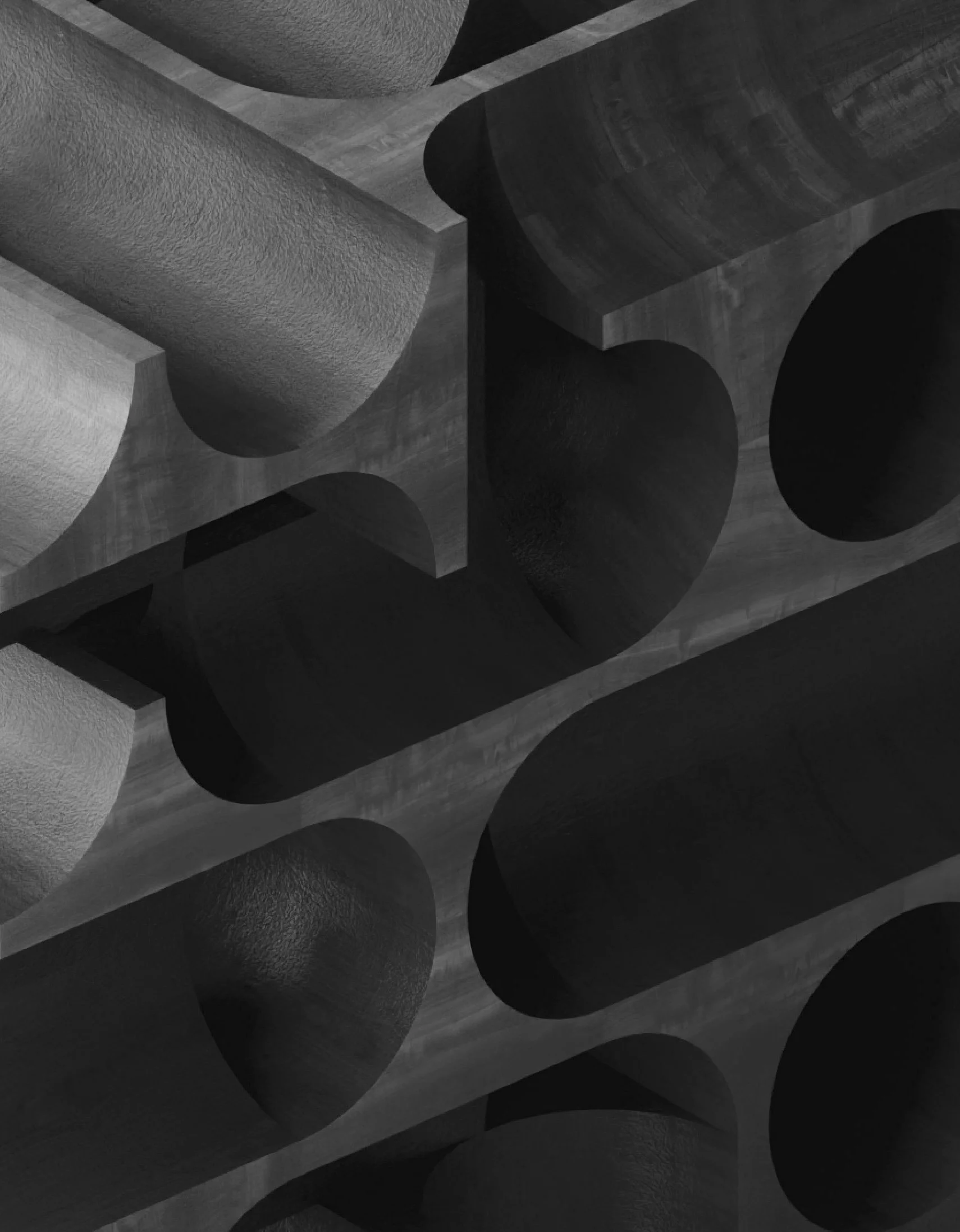
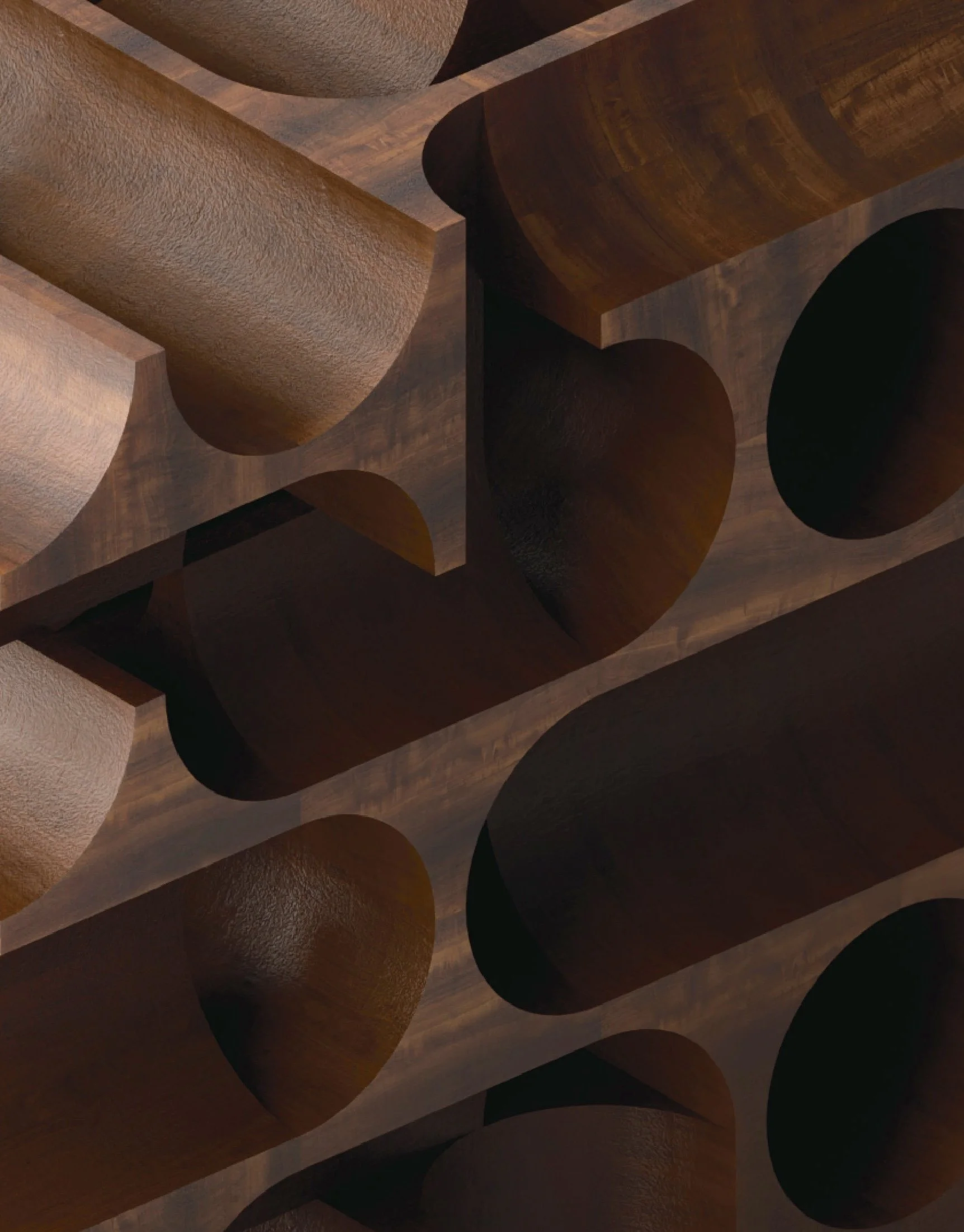
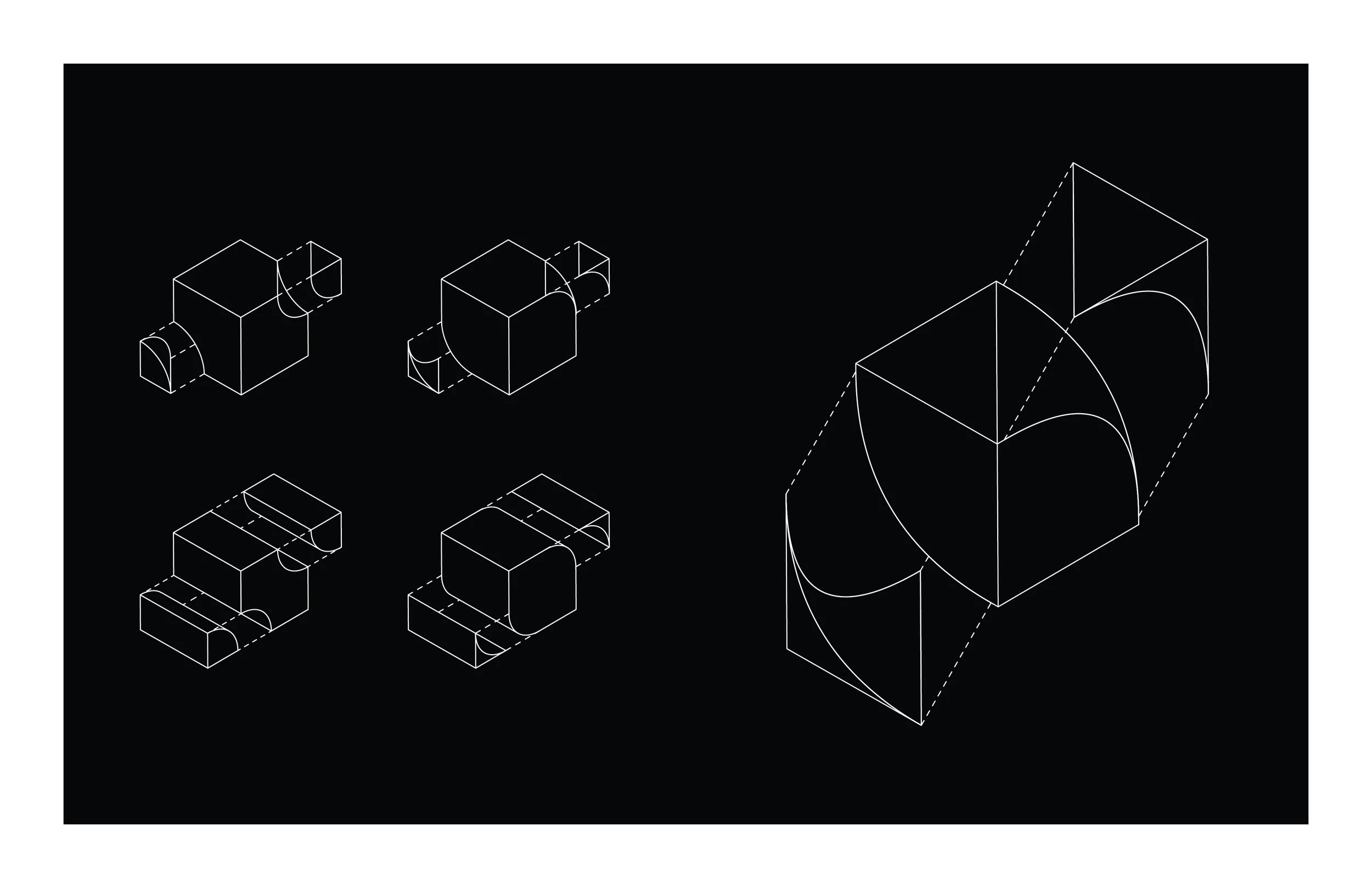
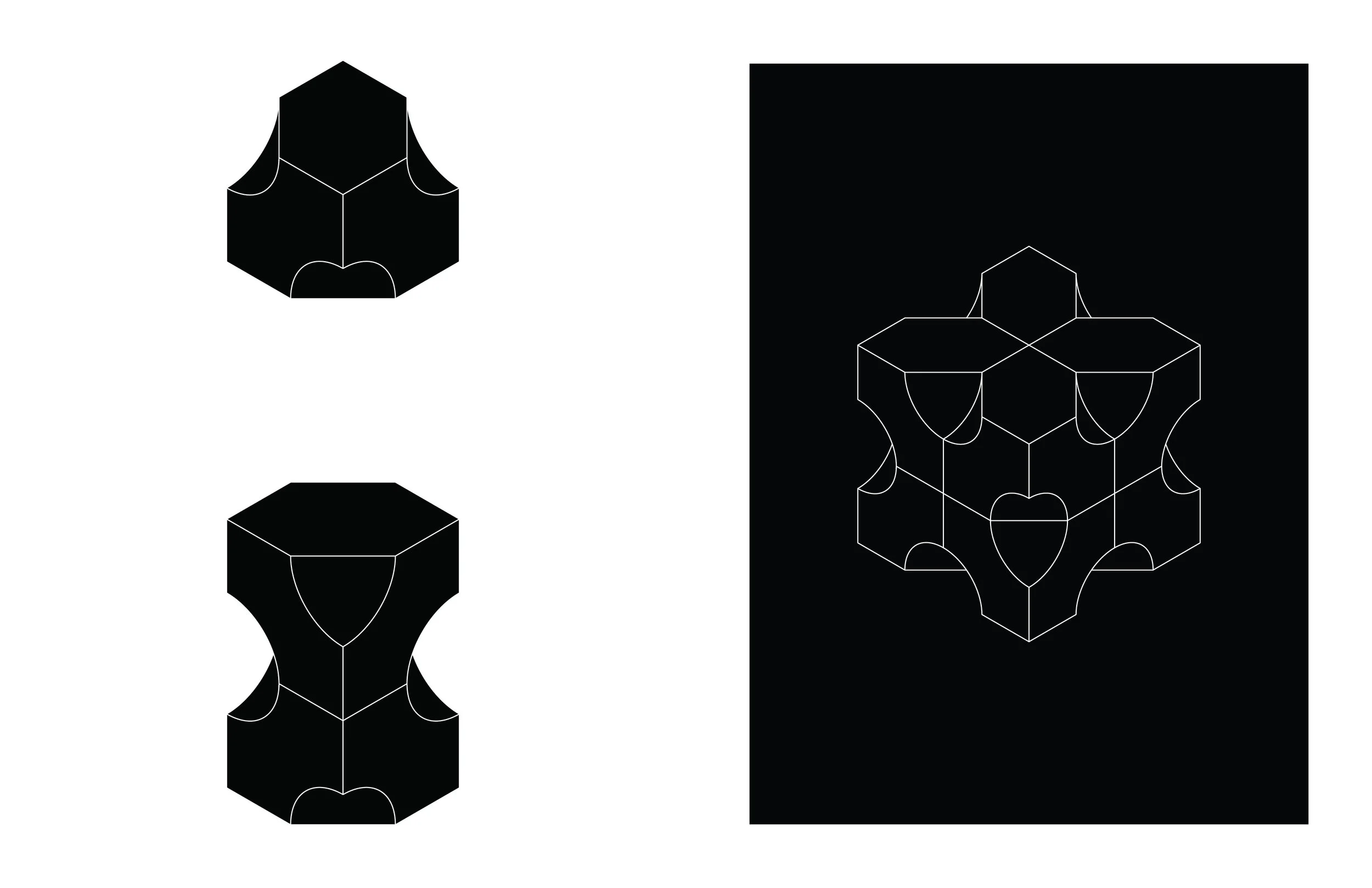
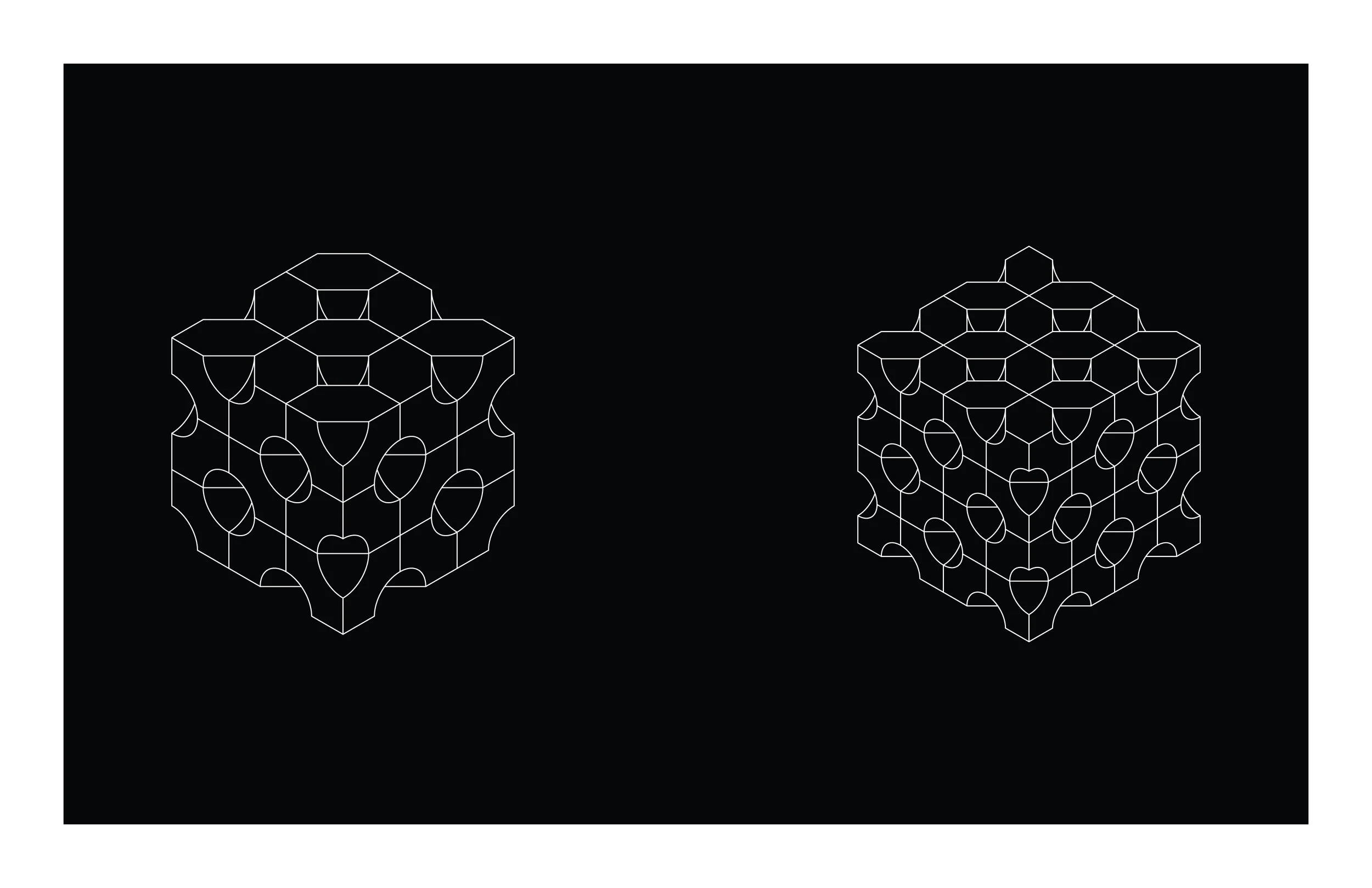
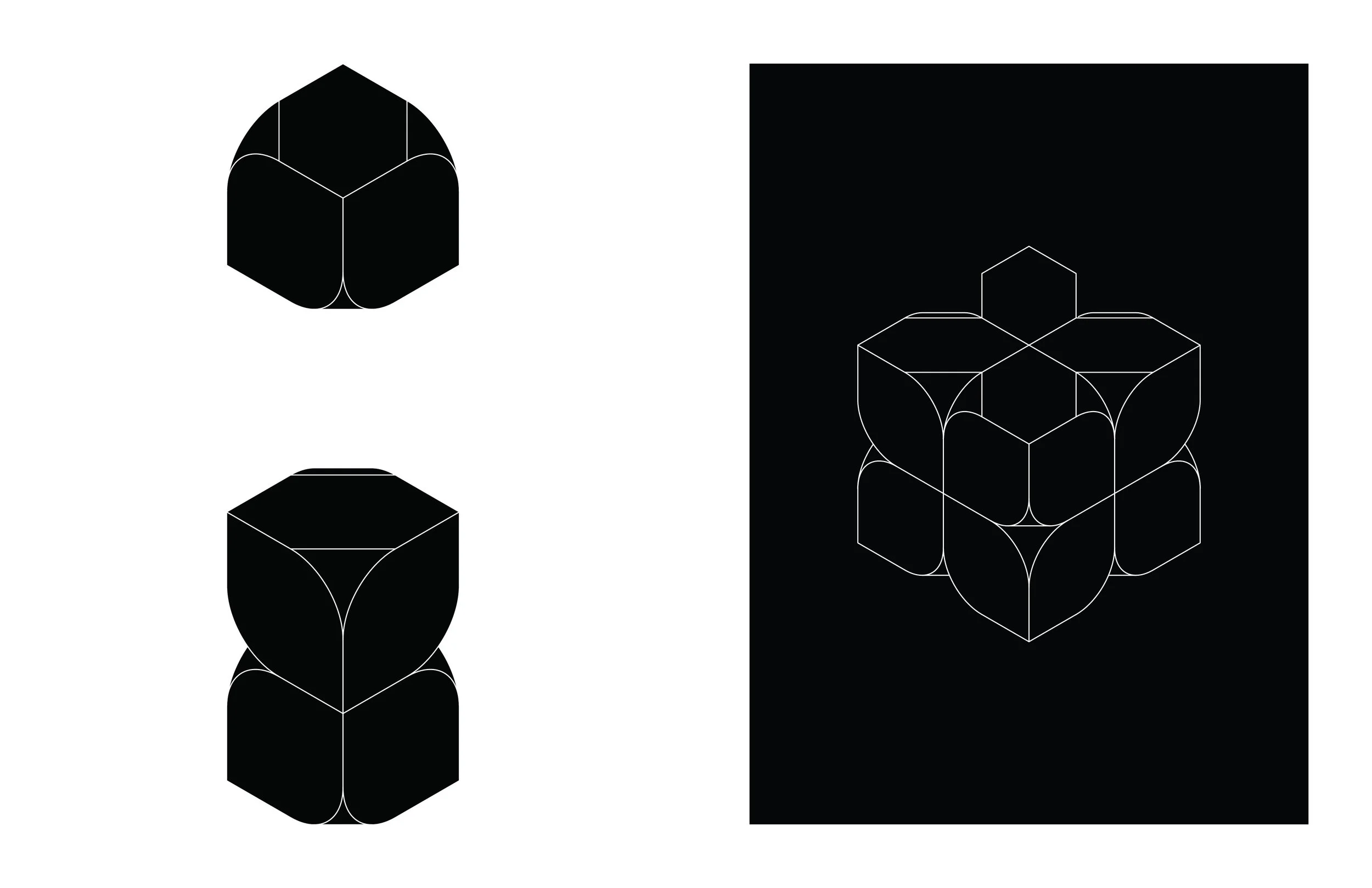
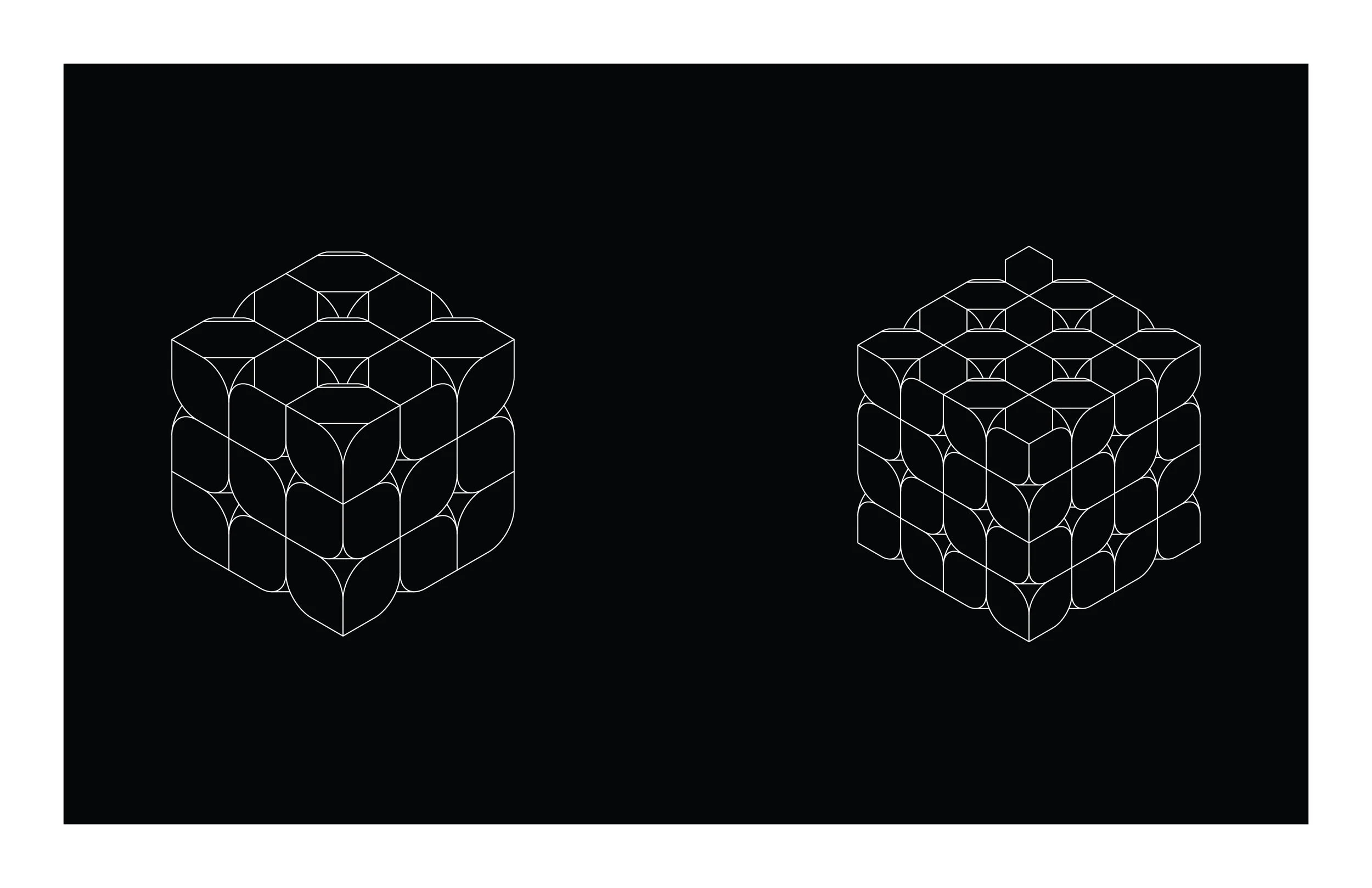
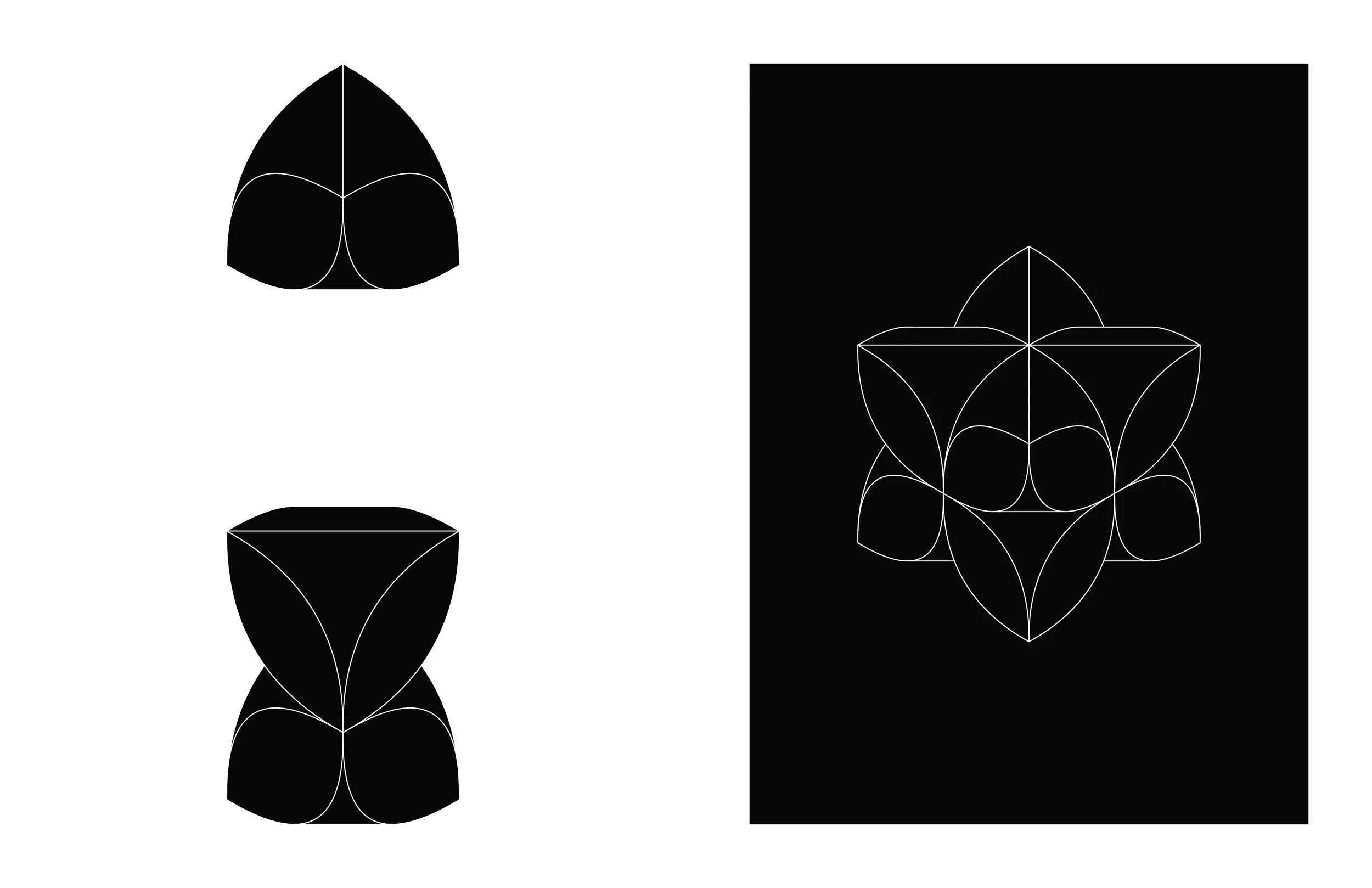
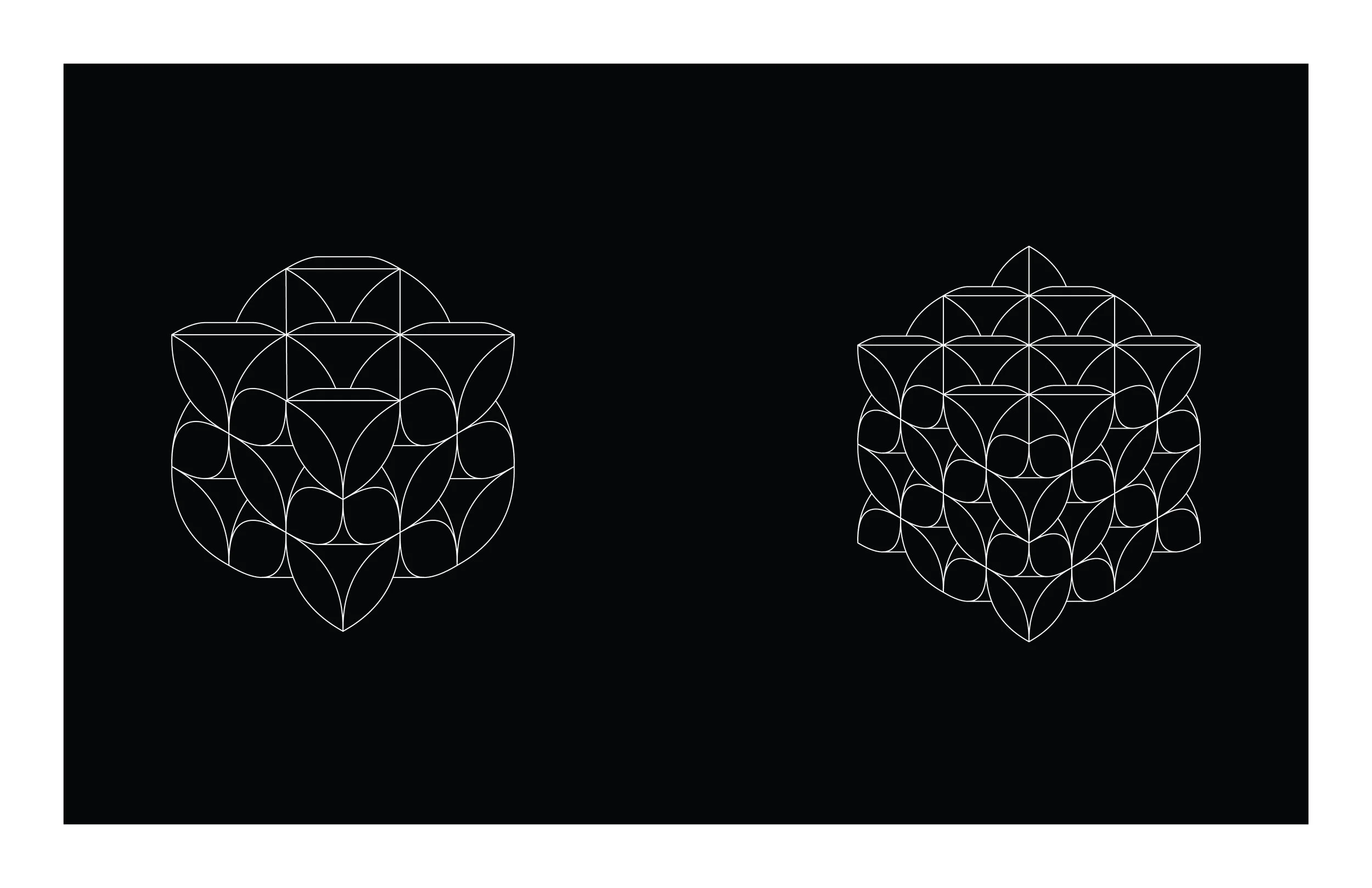
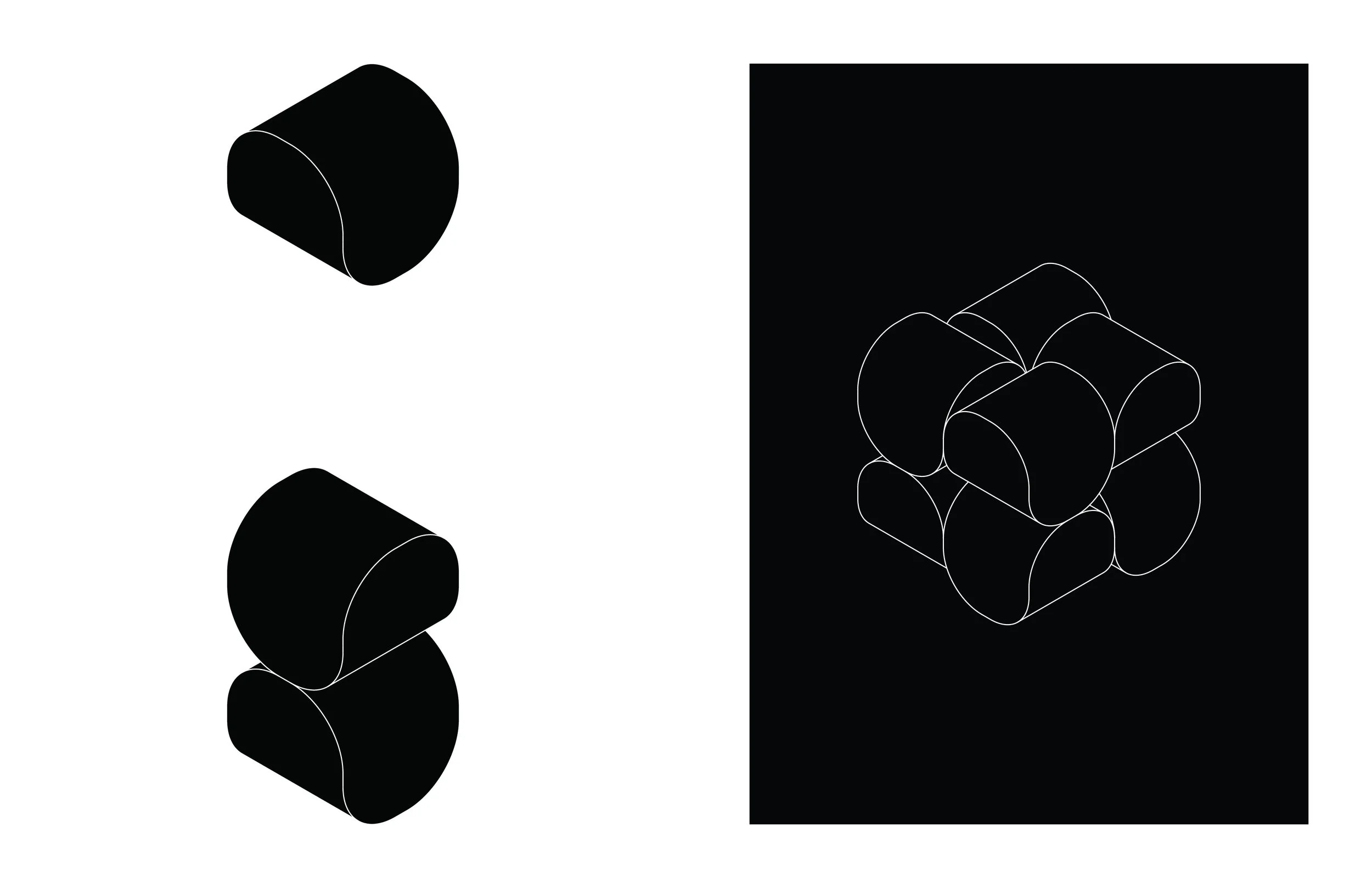
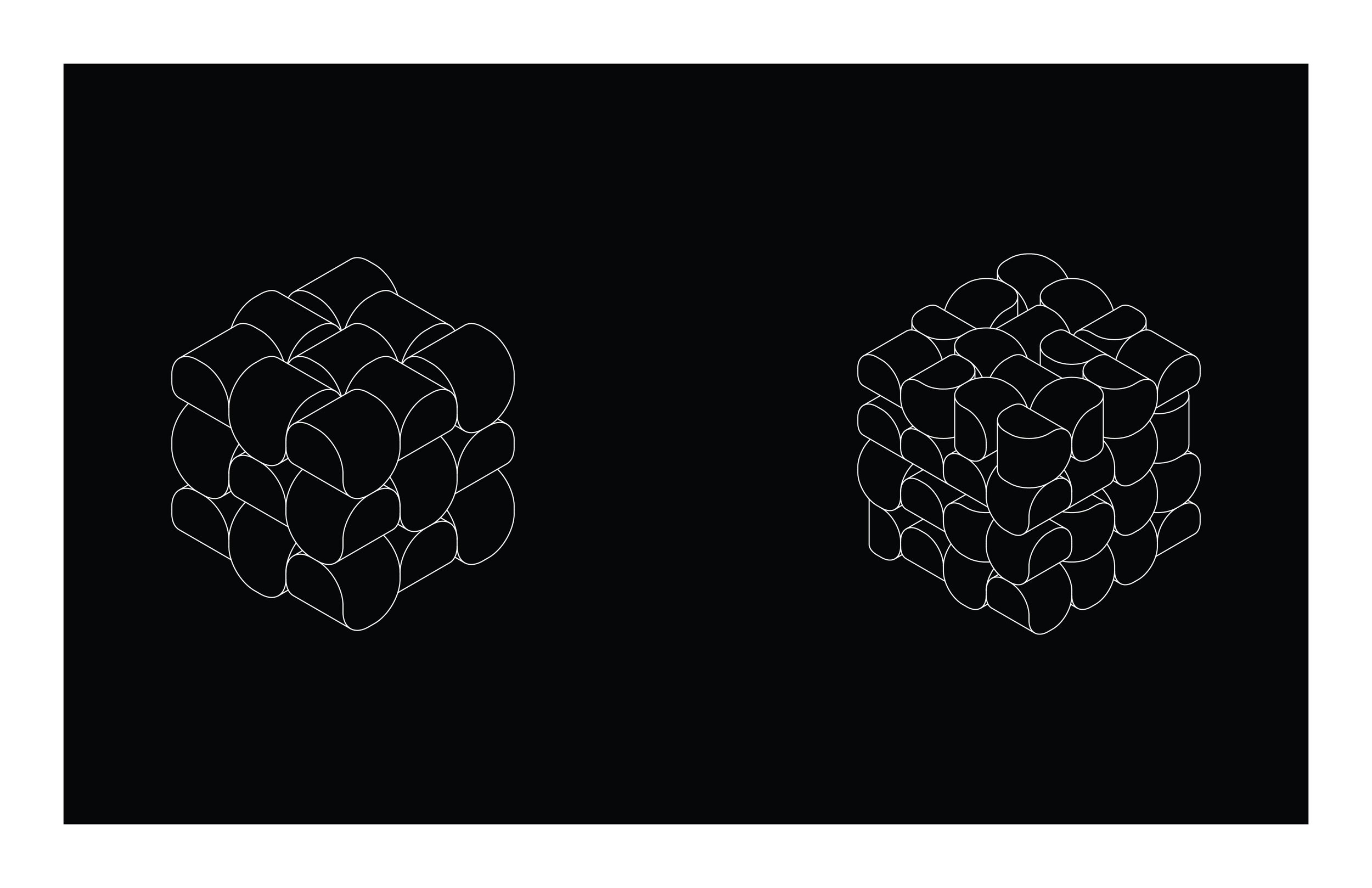
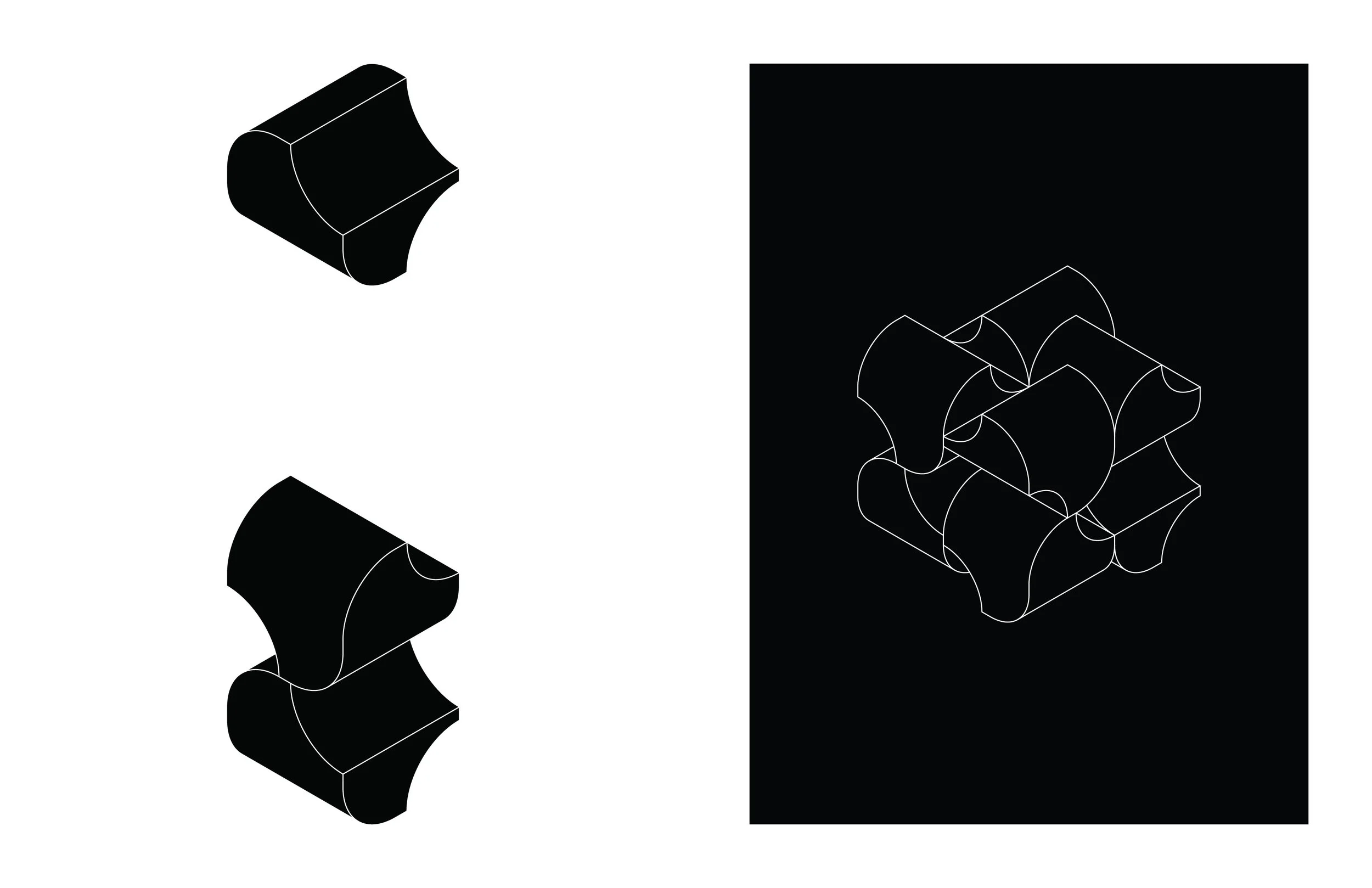
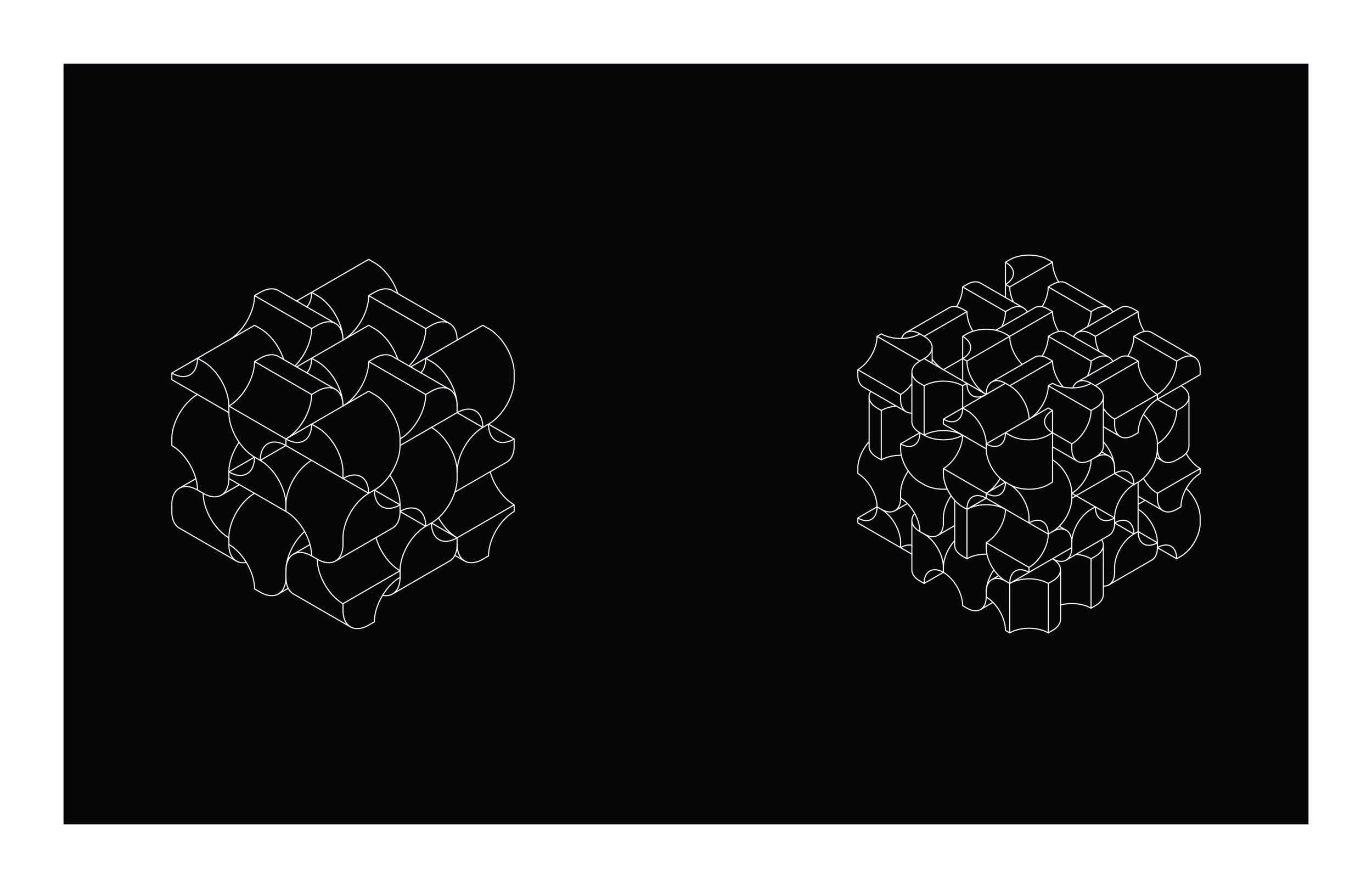
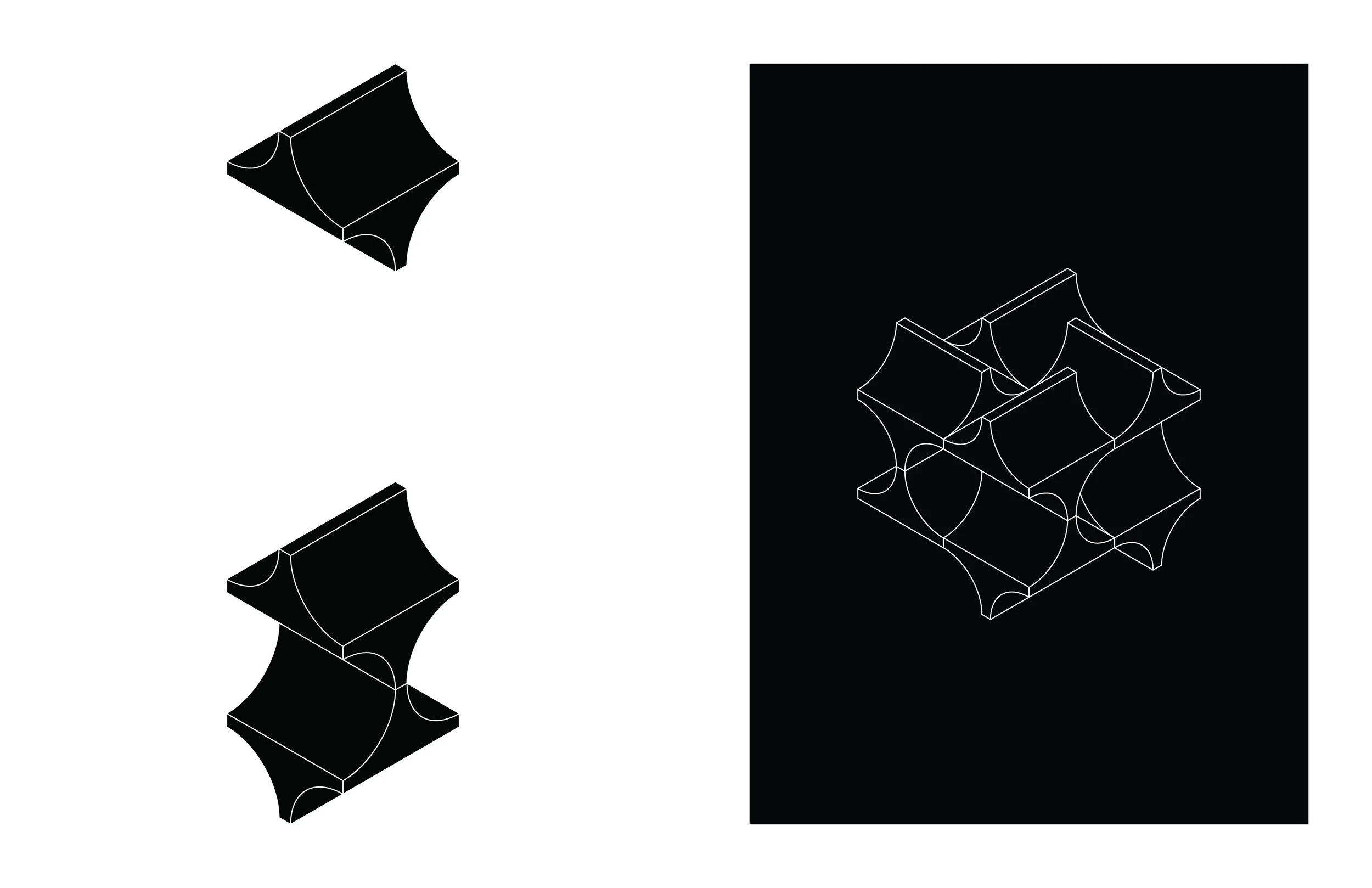
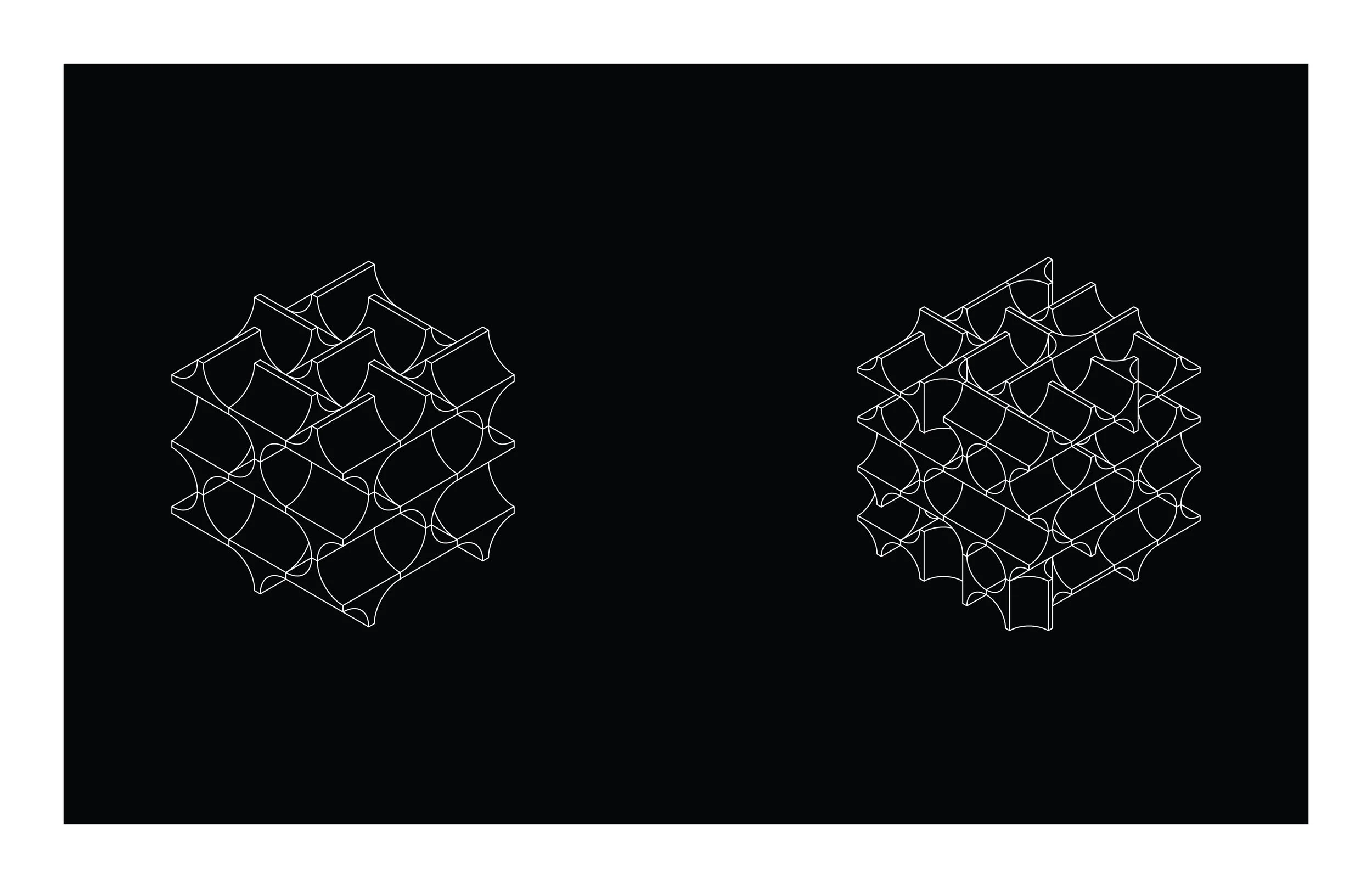
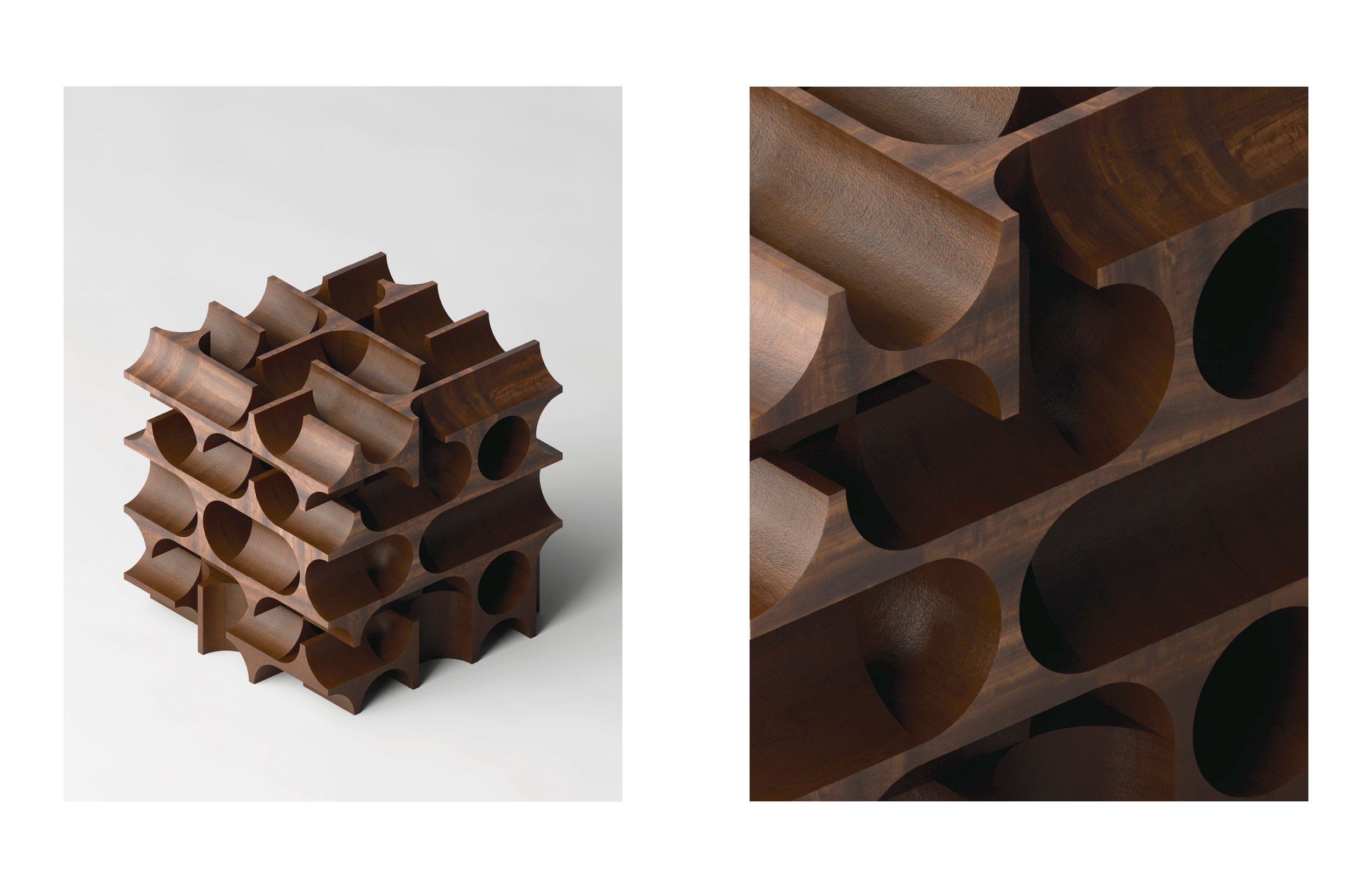
Cutting Corners extends the work previously developed in the Outline series by translating its fundamental geometric elements—the square and quarter circle—from two dimensions into three. In this project, the square becomes a cube, and the quarter circle becomes a volumetric subtraction carved from the cube. The resulting unit establishes a simple relationship between solid and void that becomes the basis for a larger system of aggregation. The project also extends the 2D logic of Truchet tiling into 3D form. At the core of Truchet tiling is the creation of visual continuity between neighboring tiles through a pattern that is asymmetrical with respect to rotation. Here, the carved quarter-circle volume can occur in either a concave or convex configuration and can be oriented at either 90 or 45 degrees relative to a cube face. These variations establish the geometric connections between adjacent cubes and allow local relationships to generate larger spatial patterns. Individual cubes are aggregated according to a simple rule-based system in which congruent faces or edges are matched. The resulting assemblies are organized into 1×1, 1×2, 2×2, 3×3, and 4×4 configurations, allowing the system to be studied at multiple scales. Rather than producing a continuous mass, the aggregation generates a permeable solid in which void and solid are interdependent. The carved spaces extend across multiple units, visually and spatially linking them and progressively blurring the distinction between the individual cube and the larger whole.