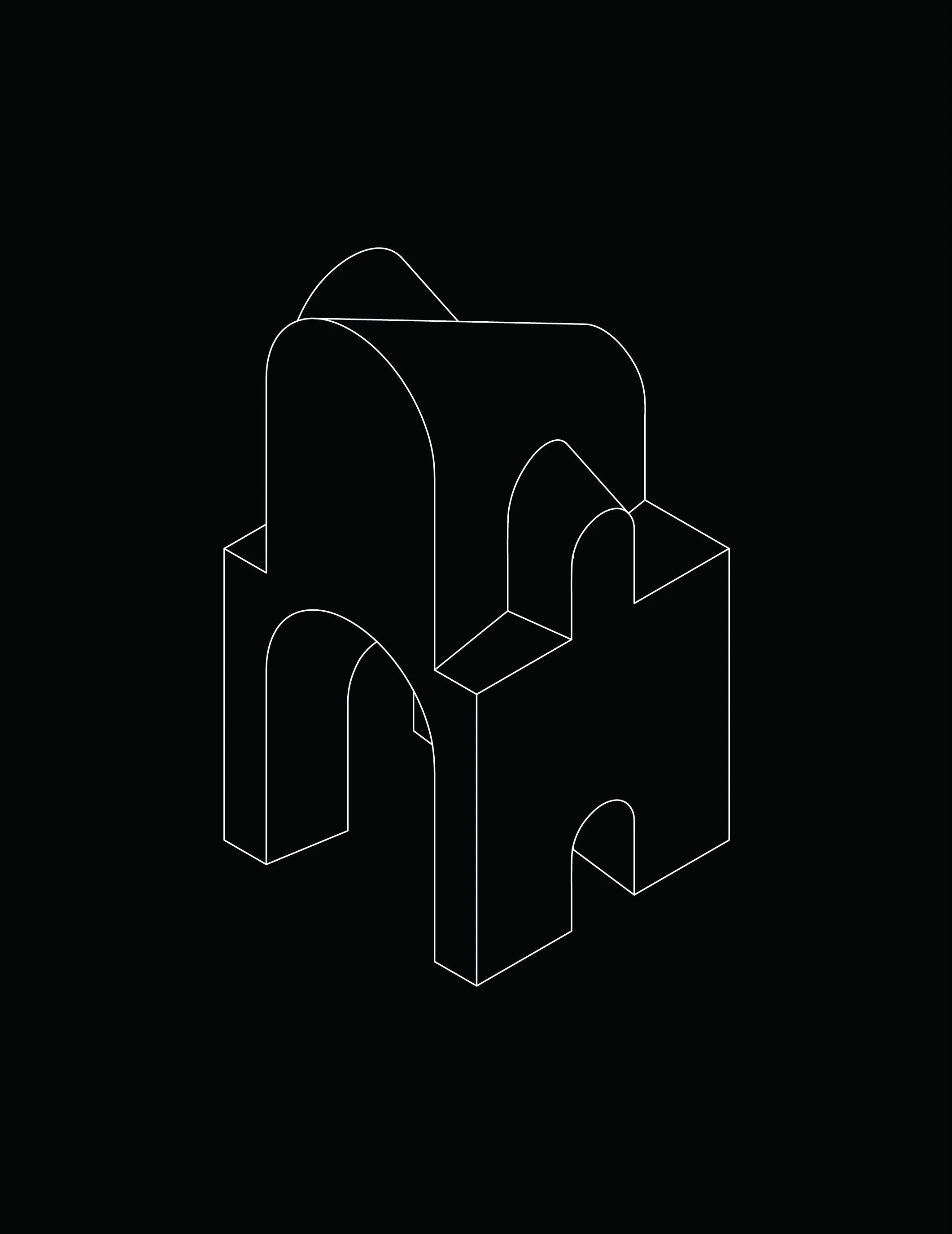
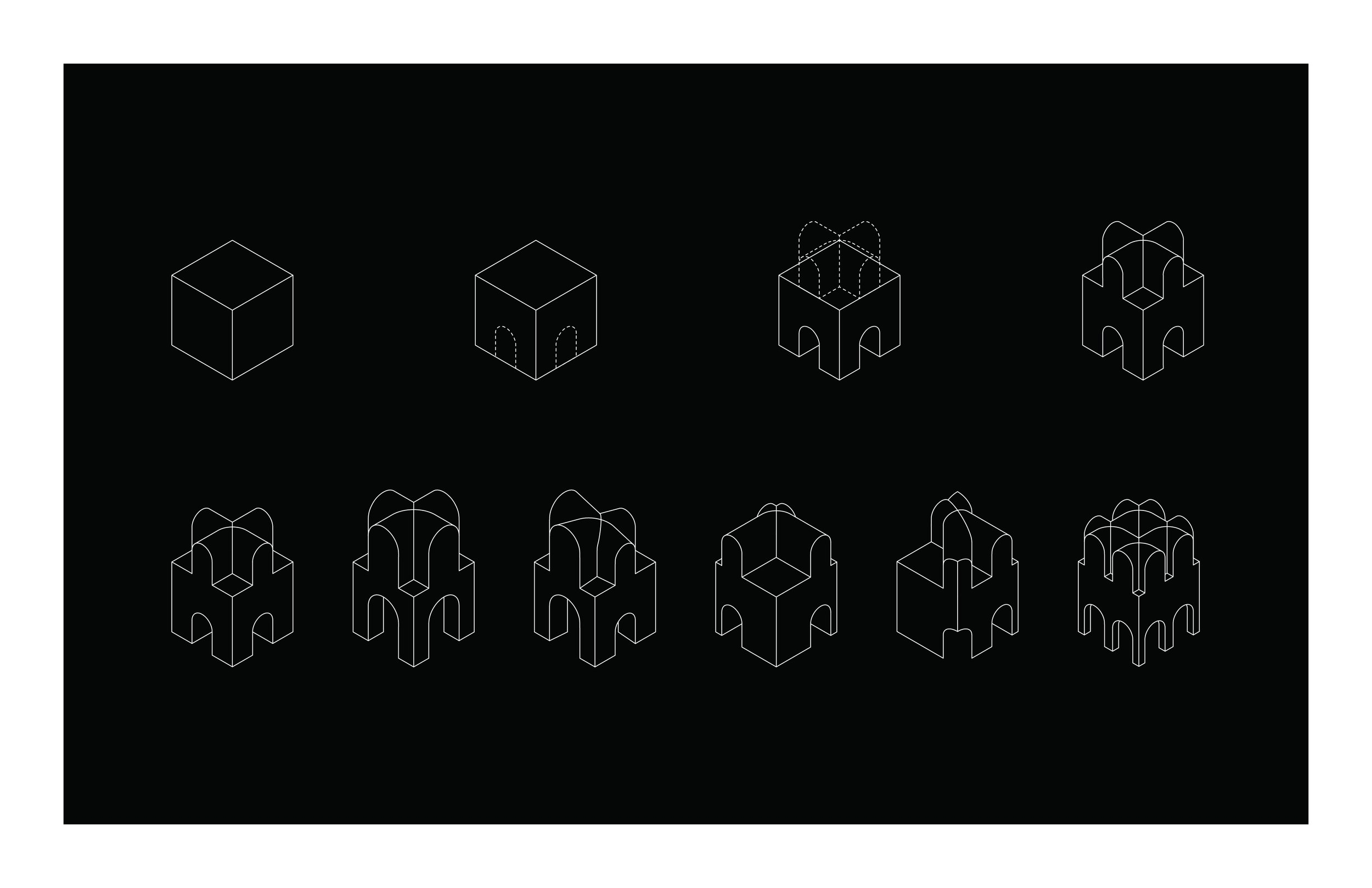
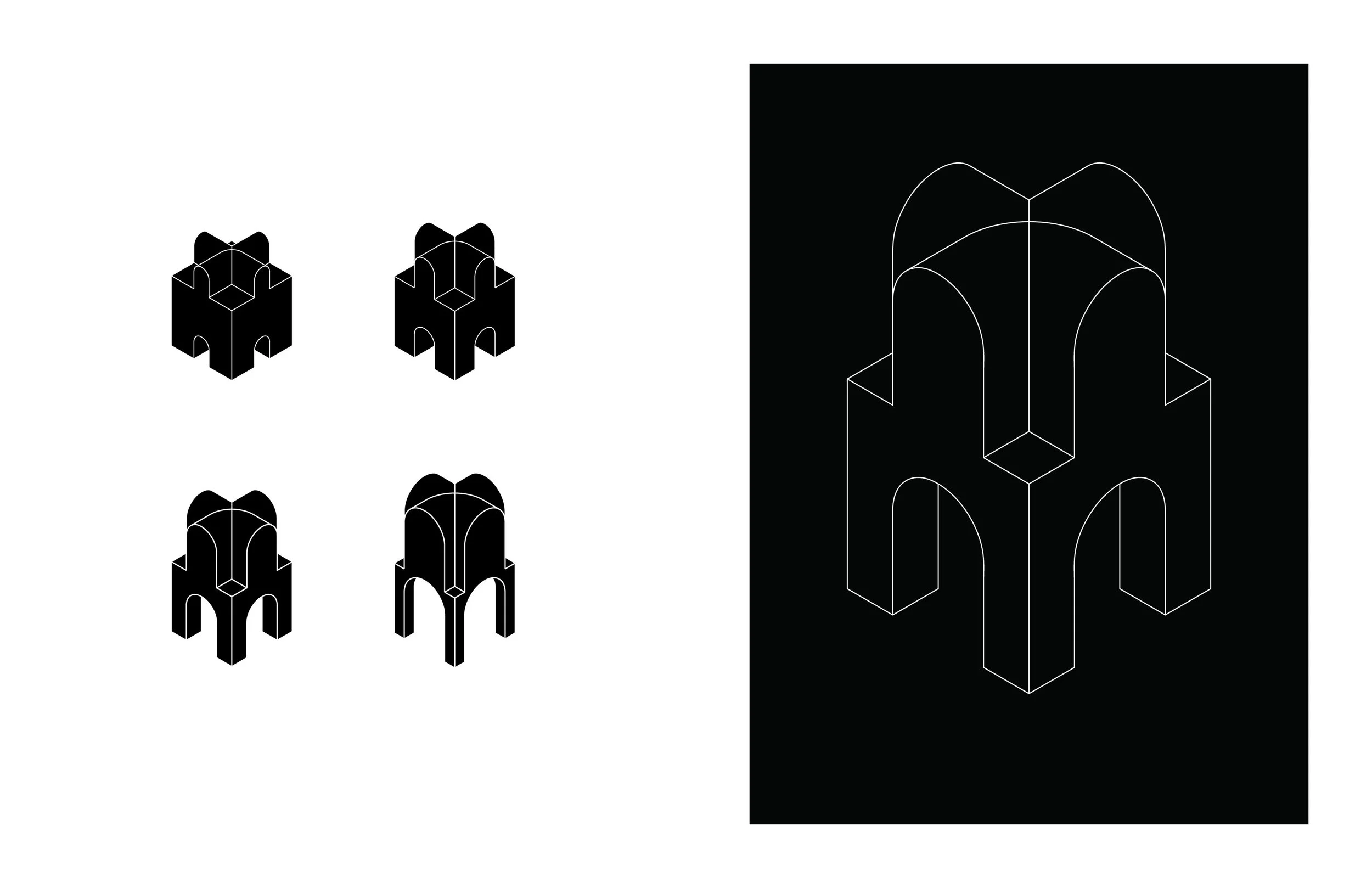
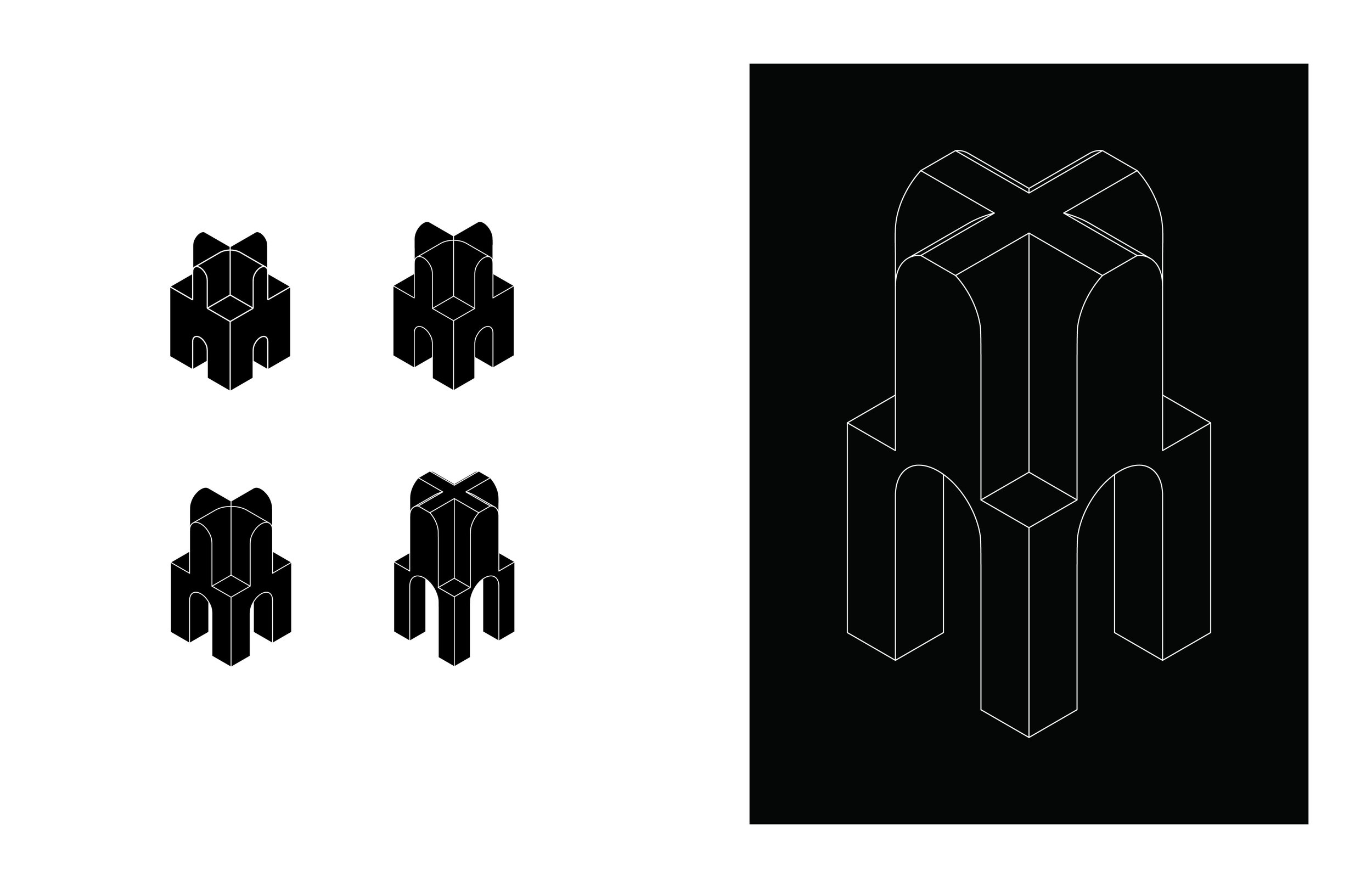
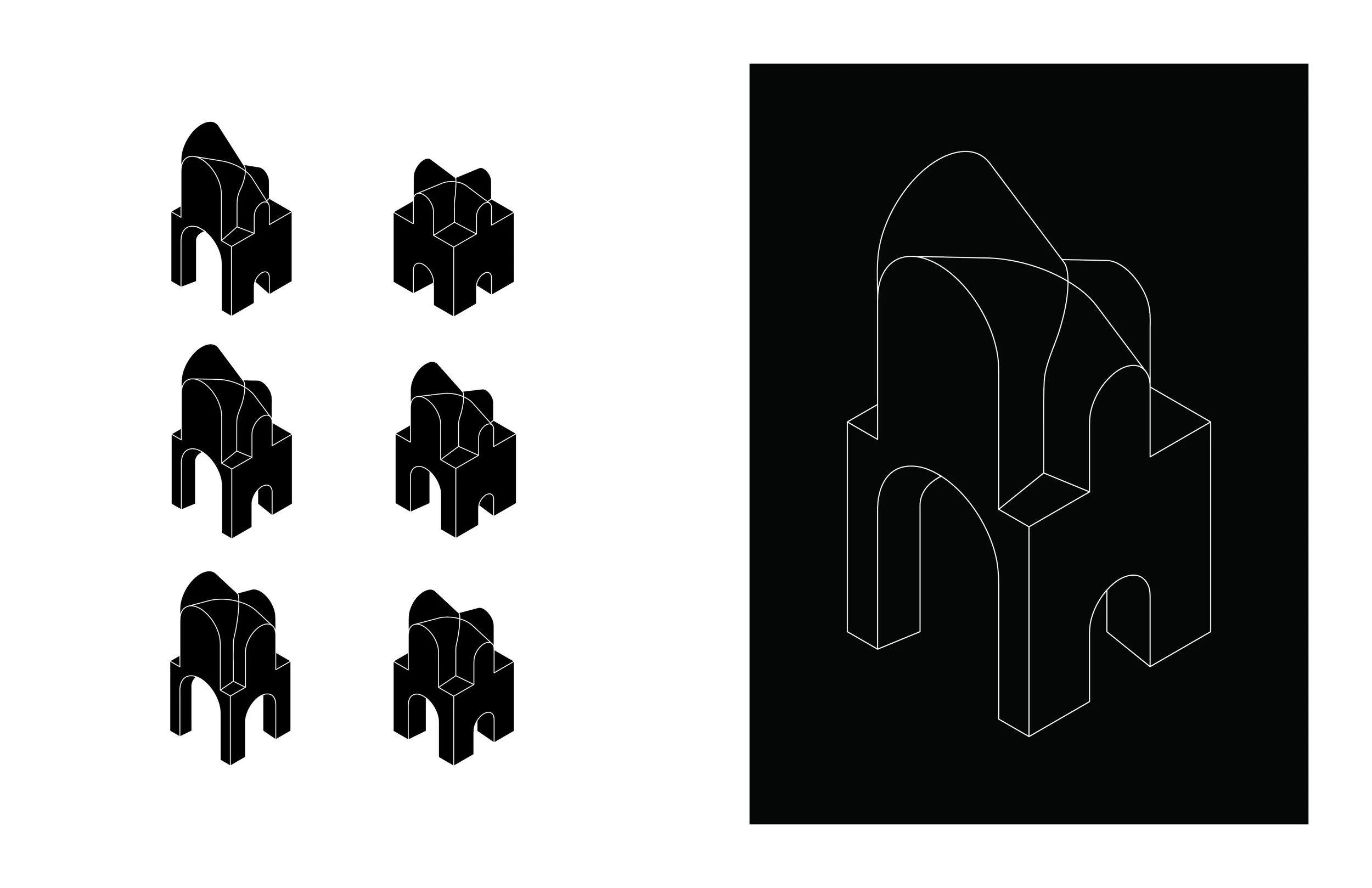
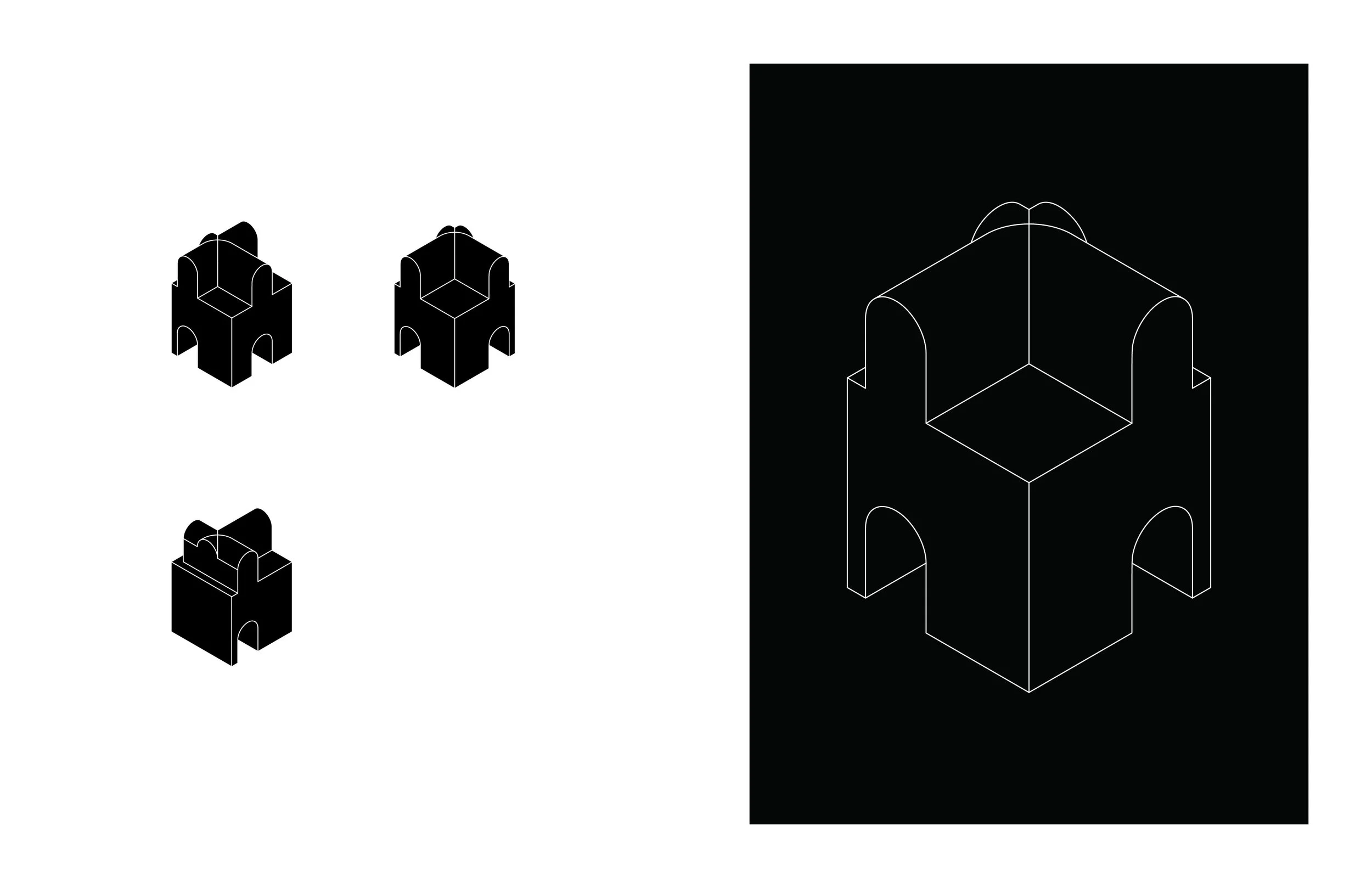
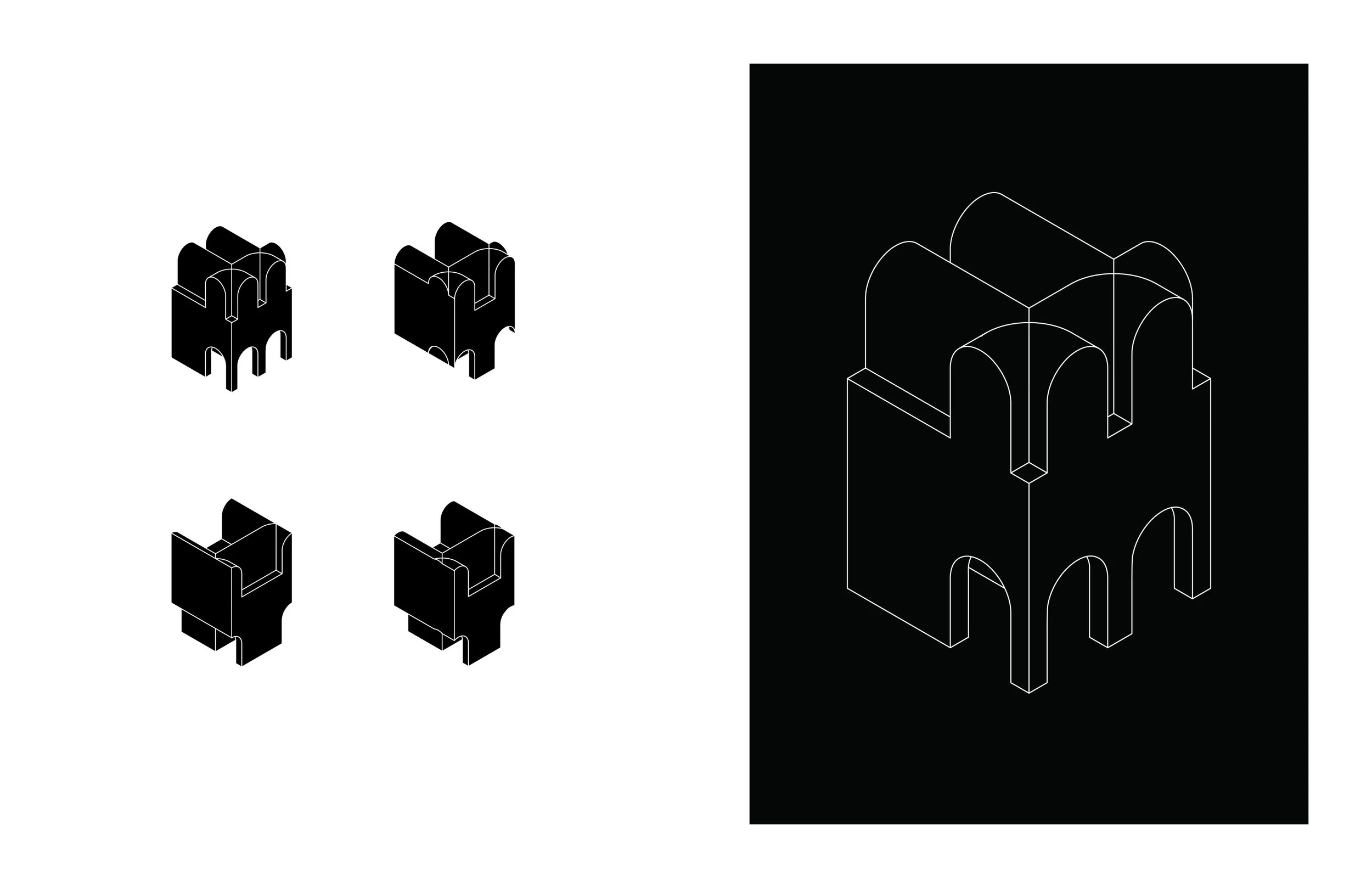
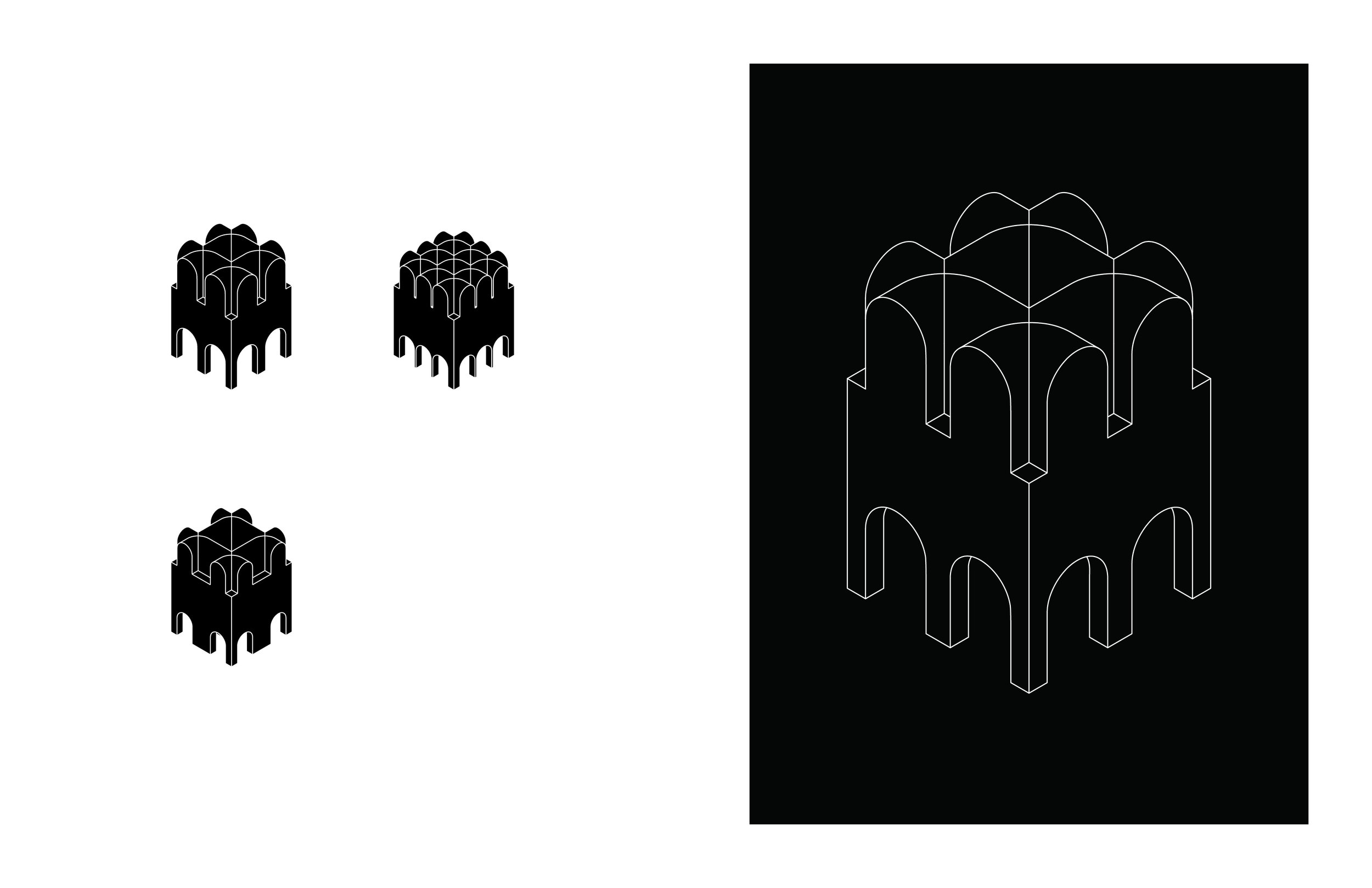
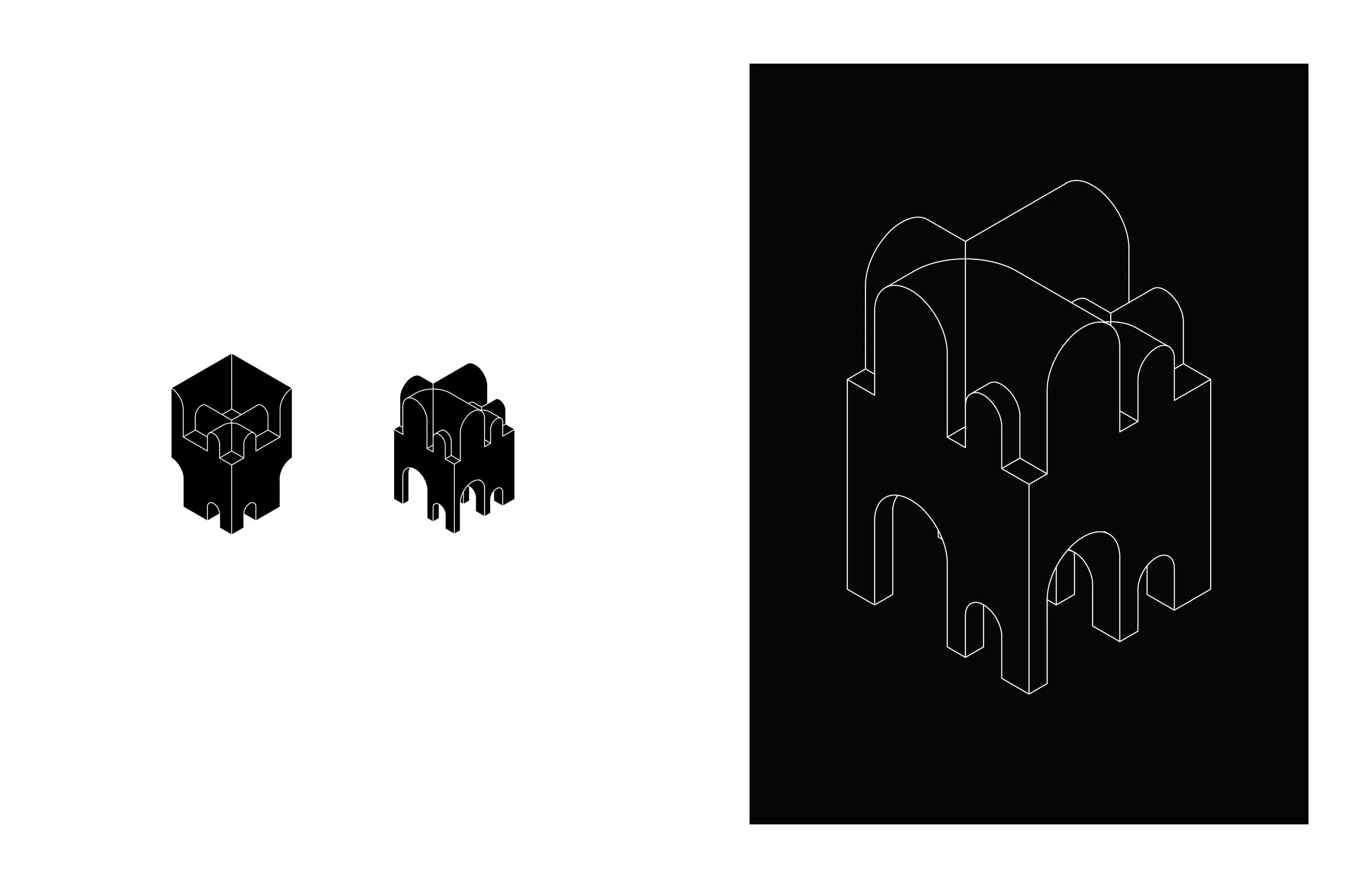
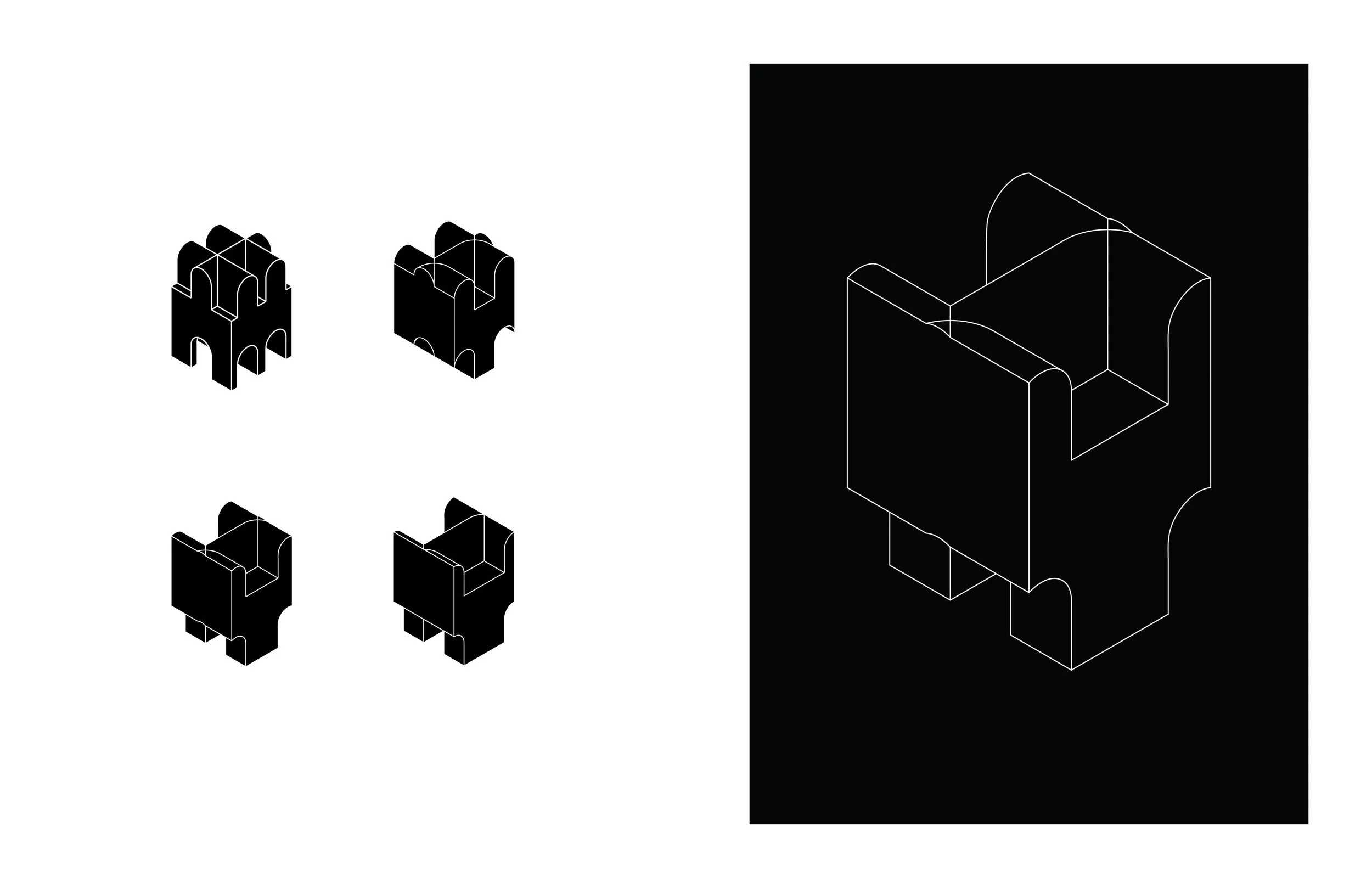
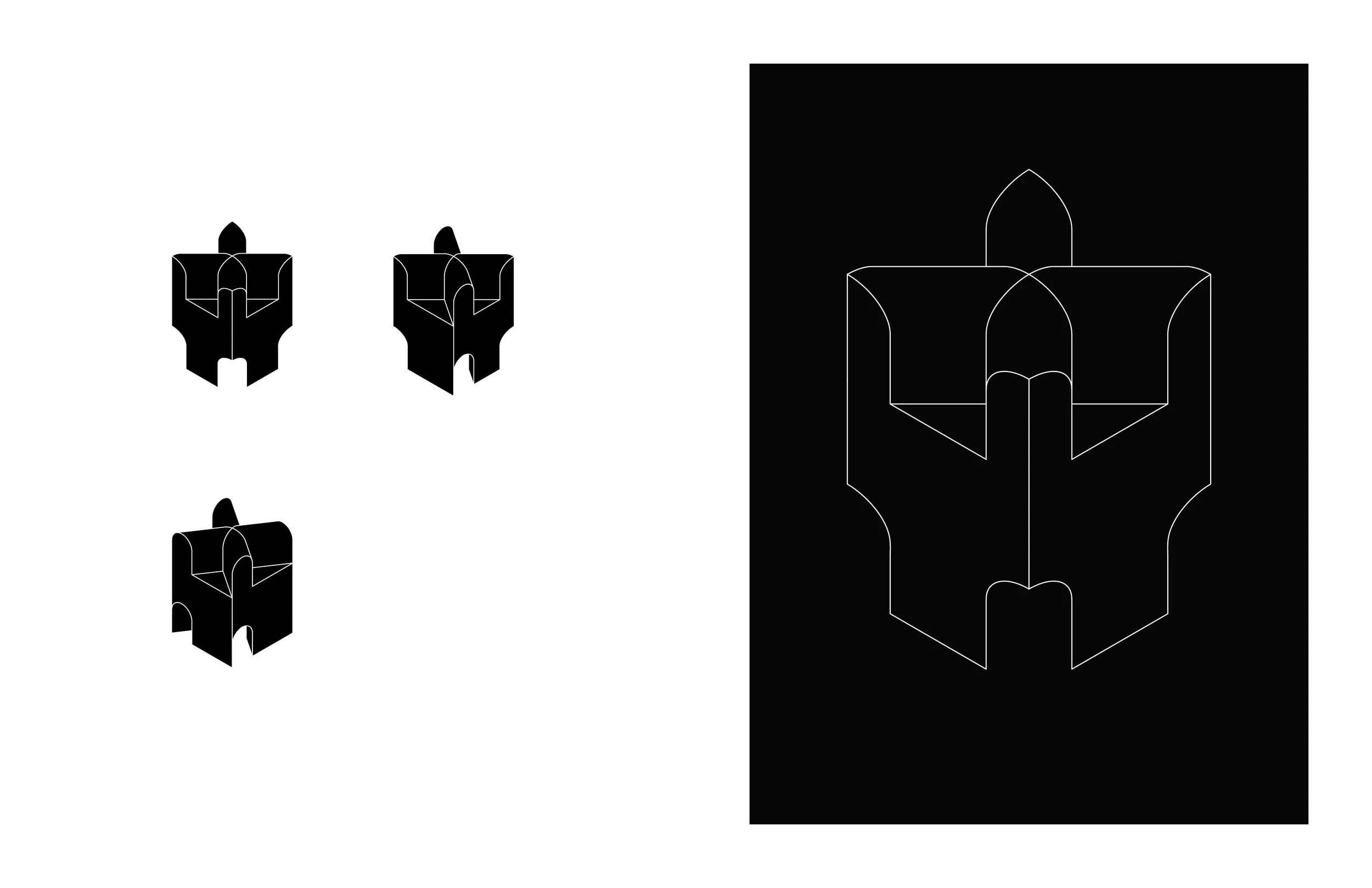
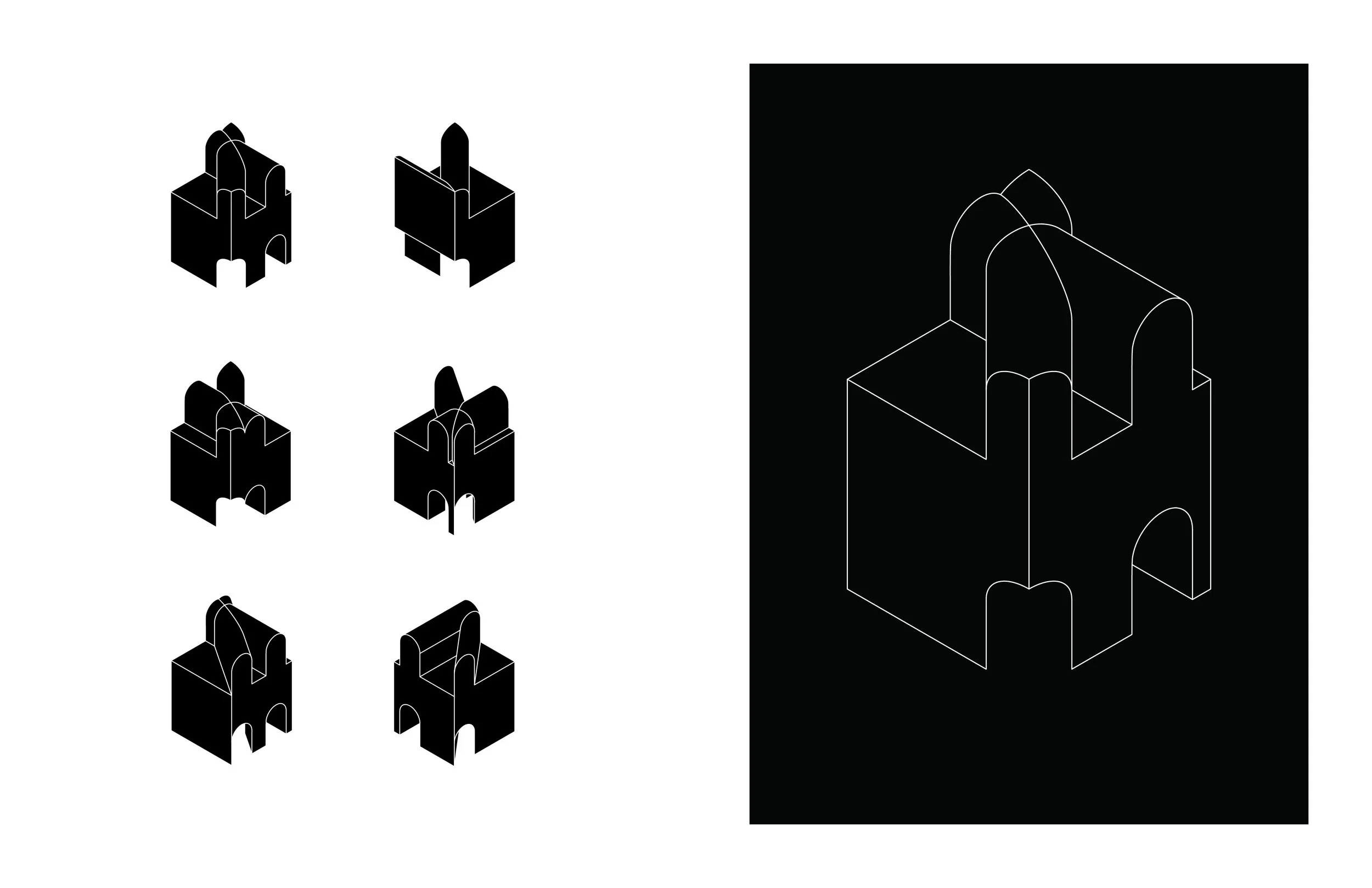
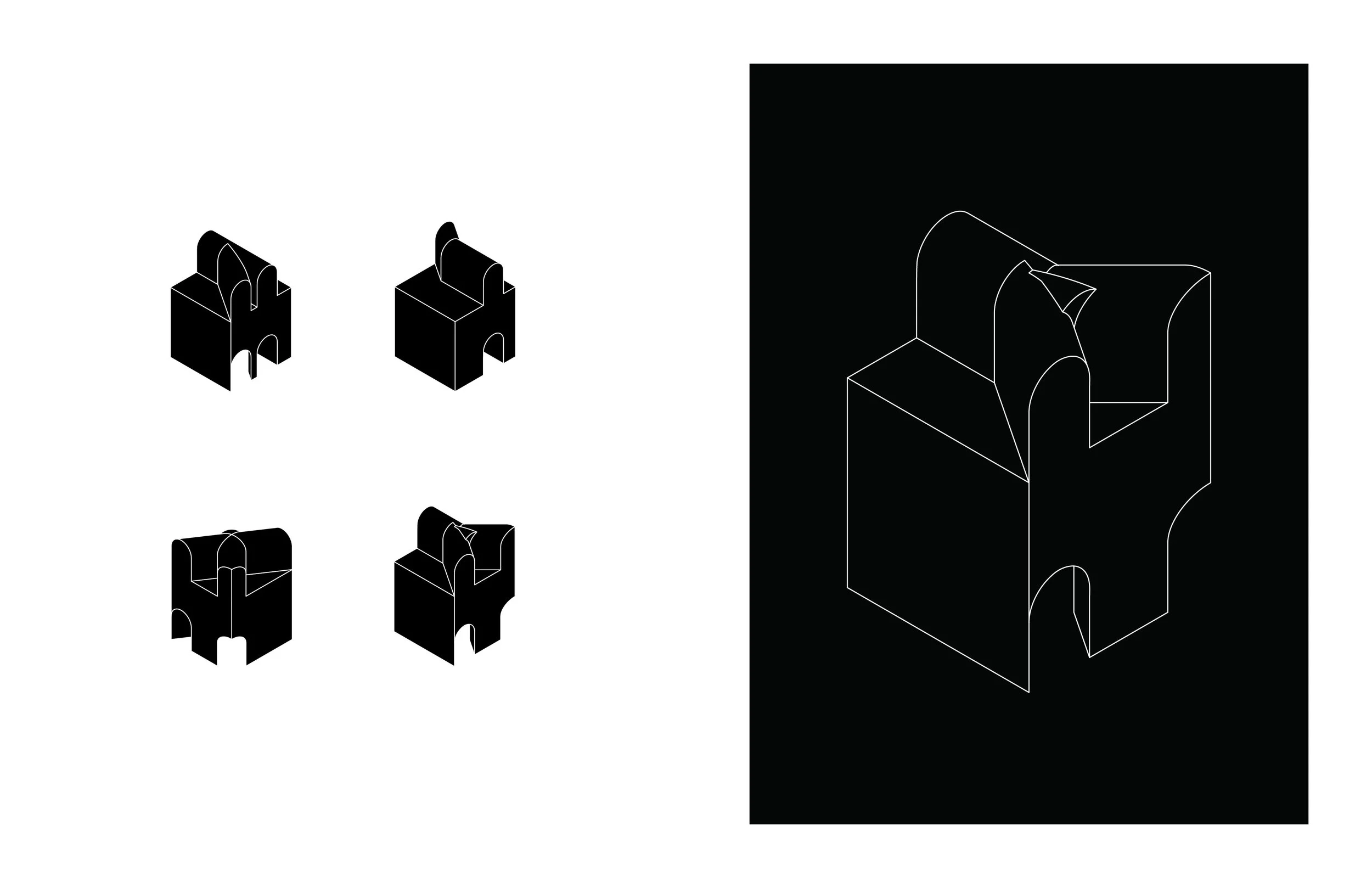
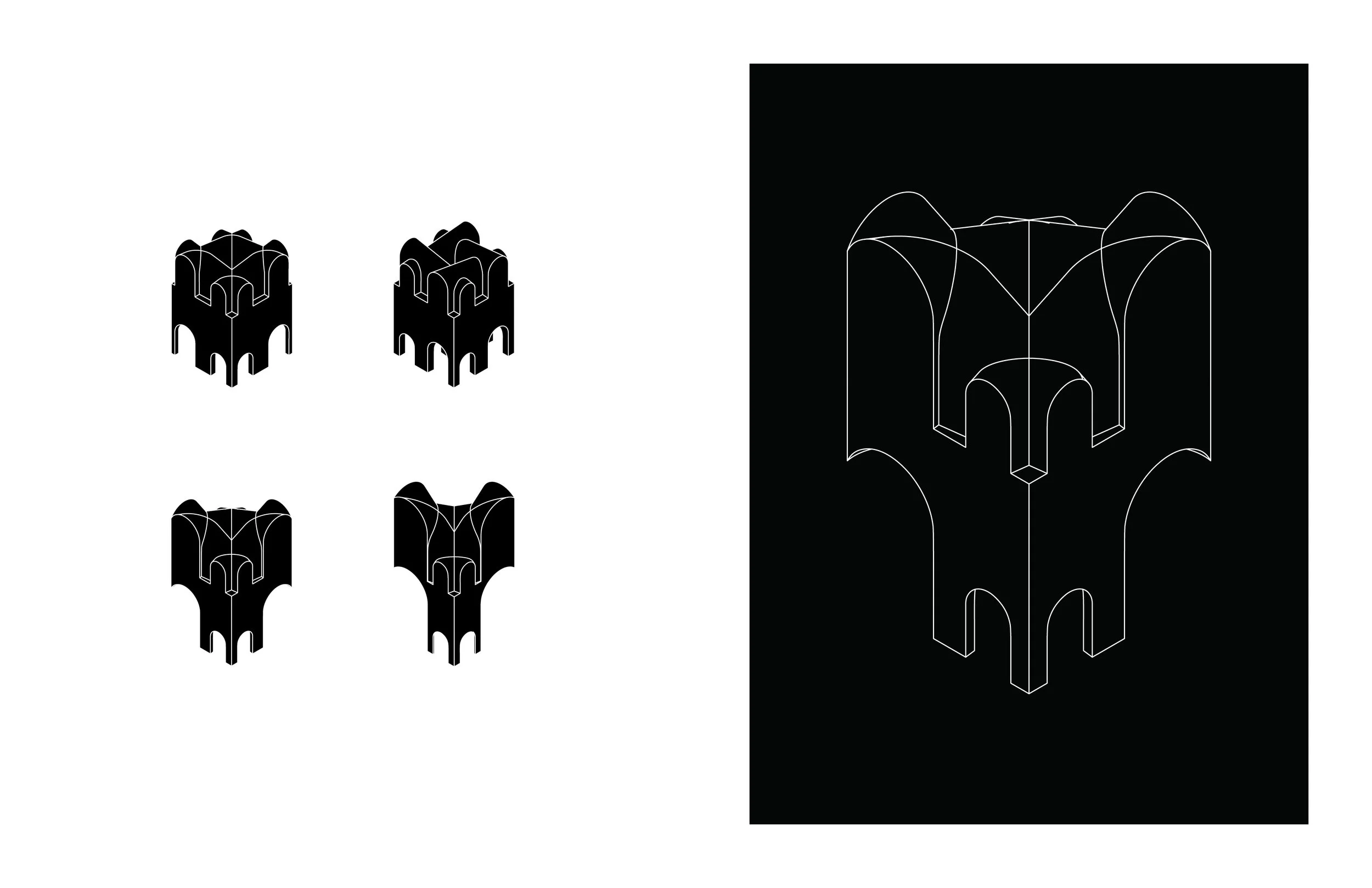
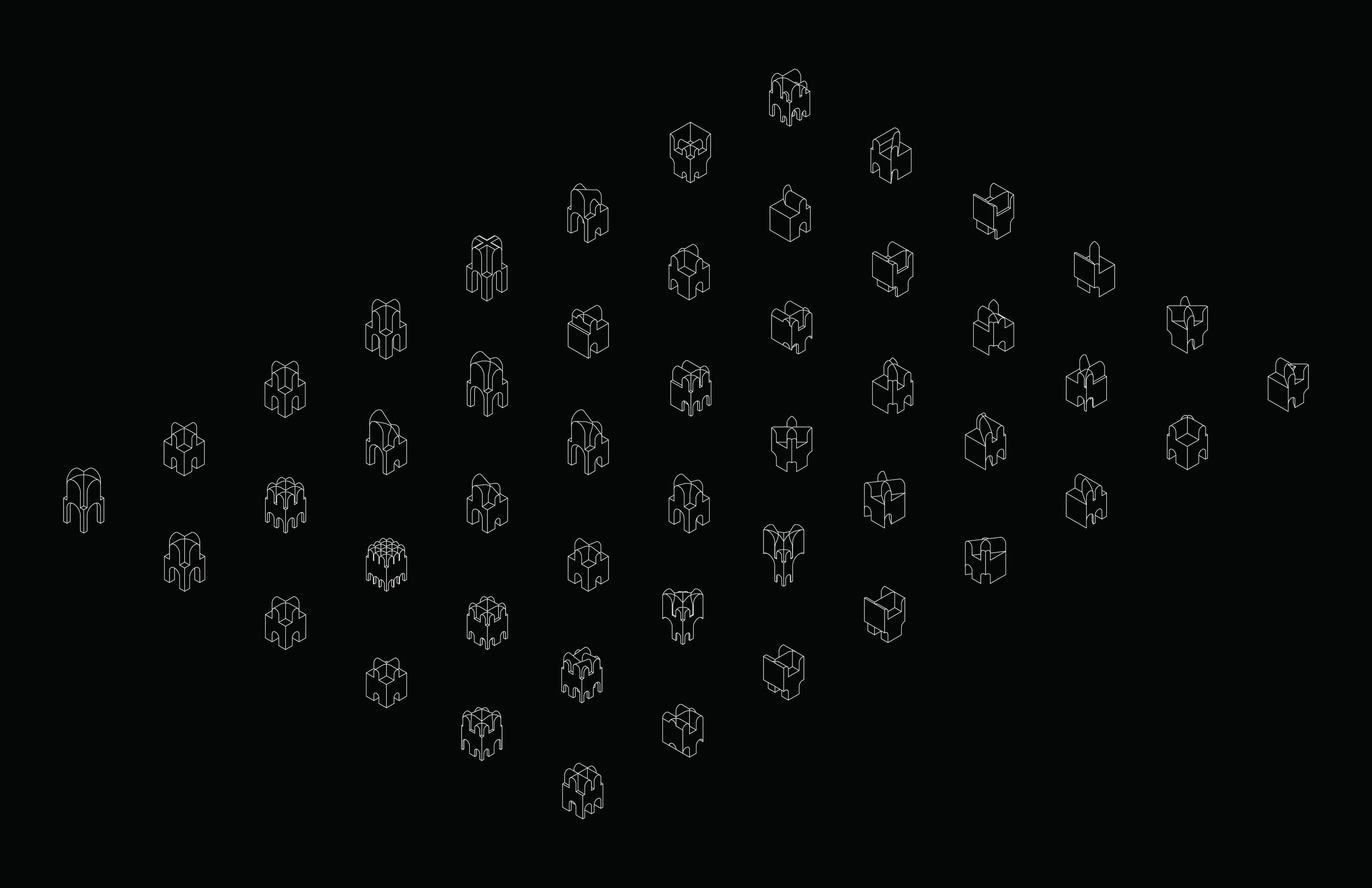
This project investigated the spatial potential of vaults and the cross vaults that emerge when two barrel vaults intersect under varying conditions. The study began with a cube from which an intersecting vault, or cross vault, was carved. The resulting void was then transformed into a solid and positioned atop the original cube. By presenting the void and its solid counterpart simultaneously, the model enabled a clearer reading and analysis of the geometry produced by the intersection. The research examined a range of cross-vault variations generated through changes in size, number, and angle of intersection. Initial studies focused on the systematic modification of individual variables, including width, height, and the slope of intersection. The investigation then expanded to intersections involving two, three, and four vaults of equal height, followed by configurations of multiple vaults at varying heights. These were explored first at right angles and subsequently at a range of oblique angles. In total, the systematic variation of parameters produced 48 distinct outcomes. Some revealed familiar spatial conditions, while others generated unexpected forms. Together, these results broadened the formal vocabulary of the cross vault and highlighted its potential for diverse spatial and architectural expression.